
Introduction
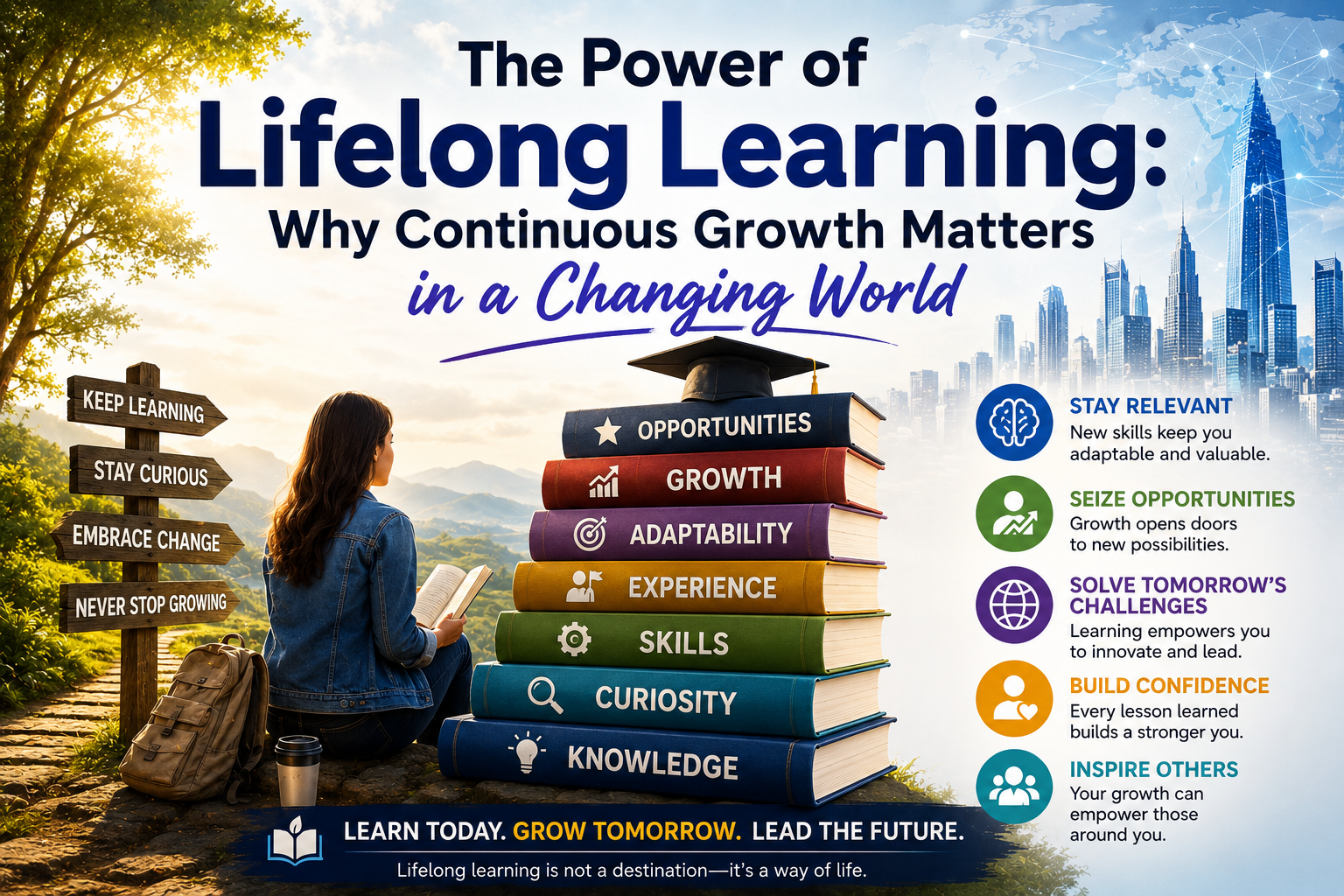
Learning is often associated with schools, colleges, and universities, but true education extends far beyond the classroom. In today’s rapidly changing world, where technology evolves, industries transform, and new opportunities emerge every day, lifelong learning has become more important than ever. It is the continuous pursuit of knowledge and skills throughout one’s life, driven by curiosity, personal growth, and professional development.
Lifelong learning is not limited to formal education. It includes reading books, attending workshops, taking online courses, learning new languages, developing hobbies, and gaining practical experience. Individuals who embrace continuous learning are better prepared to adapt to change, solve problems creatively, and achieve long-term success.
Table of Contents
What Is Lifelong Learning?
Lifelong learning refers to the ongoing process of acquiring knowledge, skills, values, and experiences throughout life. Unlike traditional education, which usually has a defined beginning and end, lifelong learning is a continuous journey.
People engage in lifelong learning for various reasons, including:
- Improving career opportunities
- Developing personal interests
- Staying updated with technological advancements
- Building confidence and independence
- Enhancing critical thinking and problem-solving skills
The beauty of lifelong learning lies in its flexibility. It can happen anywhere—at home, in the workplace, online, or through everyday experiences.
Why Lifelong Learning Is Important
1. Adapting to Technological Change
Technology is transforming nearly every aspect of modern life. Artificial intelligence, automation, cloud computing, and digital communication have changed how businesses operate and how people work. Skills that were highly valuable ten years ago may no longer be sufficient today.
Individuals who continuously update their knowledge remain competitive in the job market. Learning new software, programming languages, digital marketing strategies, or communication tools enables professionals to stay relevant and productive.
2. Career Growth and Opportunities
Employers increasingly value employees who demonstrate a willingness to learn. Continuous learning improves professional competence and prepares individuals for leadership roles.
For example, an accountant who learns data analytics can provide deeper financial insights. Similarly, a teacher who adopts digital learning platforms can create more engaging lessons for students. These additional skills often lead to promotions, higher salaries, and greater career satisfaction.
3. Personal Development
Learning is not only about earning a better income. It also enriches personal life by expanding perspectives and increasing self-confidence.
Someone who learns photography may discover a creative passion. Another person who studies nutrition can improve family health. These experiences contribute to a more fulfilling and balanced life.
The Benefits of Continuous Learning
Improved Problem-Solving Skills
Every challenge presents an opportunity to learn. People with diverse knowledge can analyze situations from multiple perspectives and develop innovative solutions.
For instance, entrepreneurs often combine knowledge from finance, marketing, technology, and psychology to solve business problems effectively.
Increased Confidence
Mastering new skills creates a sense of achievement. Whether learning public speaking or mastering a new programming language, each accomplishment builds confidence and encourages further growth.
Better Communication
Reading books, attending seminars, and interacting with people from different backgrounds improve communication skills. Effective communication strengthens relationships both personally and professionally.
Mental Well-being
Research suggests that keeping the brain active through learning helps maintain cognitive function as people age. Activities such as reading, solving puzzles, learning musical instruments, or studying new subjects stimulate the mind and promote lifelong mental health.
Real-Life Example
Consider the story of Sarah, a marketing professional who noticed that digital advertising was changing rapidly. Instead of relying solely on her previous experience, she enrolled in online courses covering search engine optimization, social media marketing, and data analytics.
Initially, balancing work and study was difficult. However, by dedicating just one hour each evening to learning, she gradually developed new expertise. Within two years, Sarah earned a promotion to Digital Marketing Manager and became responsible for leading a larger team.
Her success demonstrates that consistent, small efforts can produce remarkable long-term results.
Overcoming Common Challenges
Despite its benefits, lifelong learning is not always easy. Many people face obstacles such as limited time, financial constraints, or fear of failure.
Time Management
Busy schedules often discourage people from learning. However, even short study sessions of 20 to 30 minutes each day can accumulate into significant knowledge over time.
Financial Limitations
Fortunately, many educational resources are now freely available. Libraries, educational websites, podcasts, video tutorials, and open online courses provide high-quality learning opportunities at little or no cost.
Fear of Making Mistakes
Many adults hesitate to learn because they worry about appearing inexperienced. In reality, mistakes are an essential part of learning. Every expert was once a beginner.
Practical Ways to Become a Lifelong Learner
Developing a learning habit does not require dramatic lifestyle changes. Small, consistent actions often produce the greatest results.
Some practical strategies include:
- Read books regularly.
- Listen to educational podcasts during travel.
- Enroll in online courses related to your interests.
- Attend seminars and workshops.
- Learn a new language.
- Practice critical thinking by discussing different viewpoints.
- Set monthly learning goals.
- Reflect on lessons learned from everyday experiences.
Consistency is more valuable than intensity. Learning a little every day creates lasting progress.
The Role of Technology
Technology has revolutionized education by making knowledge accessible to people worldwide. Today, anyone with an internet connection can learn from world-class universities, industry experts, and experienced professionals.
Educational platforms, video tutorials, virtual classrooms, and interactive learning applications allow learners to study at their own pace. Artificial intelligence is also making education more personalized by recommending learning paths based on individual strengths and interests.
Technology has transformed learning from a location-based activity into a global opportunity available to almost everyone.
Building a Learning Mindset
Lifelong learners share several common characteristics:
- Curiosity about new ideas.
- Openness to constructive feedback.
- Willingness to experiment.
- Persistence despite setbacks.
- Commitment to continuous improvement.
Developing this mindset requires embracing challenges rather than avoiding them. Instead of asking, “Can I do this?” lifelong learners ask, “How can I learn to do this?”
This simple shift in perspective encourages resilience and long-term success.
Conclusion
Lifelong learning is one of the most valuable investments a person can make. It enhances professional opportunities, strengthens personal development, improves mental well-being, and prepares individuals to thrive in an ever-changing world. Learning is not confined to classrooms or academic institutions; it is a lifelong journey fueled by curiosity, determination, and the desire for growth.
As technology continues to reshape society and industries evolve, those who remain committed to continuous learning will be better equipped to face challenges, seize opportunities, and lead meaningful lives. Every new skill acquired, every book read, and every lesson learned contributes to a stronger, wiser, and more adaptable individual. Ultimately, lifelong learning is not merely about gaining knowledge—it is about unlocking human potential and embracing a future filled with possibilities.