Packaging is one of those business decisions that seems simple until you look closely. A box, bottle, tray or mailer may be used for only a few days, yet its environmental consequences can last for decades.
That is why the best sustainable packaging solutions are not merely attractive substitutes for plastic. They use less material, protect the product properly and have a realistic path to reuse, recycling or composting after the customer is finished with them.
Direct answer: Sustainable packaging solutions reduce environmental harm across a package’s life cycle. They limit unnecessary material, use responsibly sourced or recycled inputs, protect products efficiently and support practical reuse, recycling or composting. The right option depends on performance, local infrastructure, customer behavior and credible evidence.
The urgency is real. Global plastic waste reached 353 million tonnes in 2019, and the OECD’s Global Plastics Outlook projects that it could rise to 1.014 billion tonnes by 2060 under business-as-usual policies.
What sustainable packaging actually means
There is no perfect packaging material. A paper package can carry a heavy production footprint. A compostable film may end up in a landfill. A heavier reusable container can be worthwhile, but only if it is returned and used enough times.
A sound decision therefore considers the complete system: raw materials, manufacturing, transport, product protection, customer use and what happens at the end. The US Environmental Protection Agency describes this as a life-cycle approach to materials management.
Product protection deserves particular attention. Replacing a sturdy package with a weaker alternative can increase leaks, breakage, spoiled food and returned orders. The environmental cost of the wasted product may be greater than the saving achieved by the package.
Why packaging decisions are changing in 2026
Regulation is pushing packaging higher on the business agenda. The European Union’s Packaging and Packaging Waste Regulation entered into force on 11 February 2025 and generally applies from 12 August 2026.
The rules address recyclability, waste prevention, recycled content, labelling and reuse. Any company selling packaged goods in the EU should review the European Commission’s PPWR guidance before approving a new design.
There is also a straightforward financial case. Oversized boxes consume more material, occupy more warehouse space and transport more air. Poorly designed packaging adds packing time and can increase product returns. Sustainability and efficiency often point in the same direction.
Four materials worth understanding
1. Mushroom mycelium
Mycelium is the root-like network of fungi. Packaging producers grow it around agricultural residues to create molded forms that can replace expanded-polystyrene inserts in some applications.
It is most promising for protective corners, electronics, furniture parts, cosmetics and gift sets. It can use agricultural by-products and may be compostable under suitable conditions.
The trade-offs are just as important. Mycelium packaging can be sensitive to moisture, production may take longer than conventional molding, and supply is not equally available in every region. It needs real compression, drop and storage testing before a large rollout.
2. Seaweed-based films
Seaweed can be turned into thin films, coatings, sachets and, in a few applications, edible or water-soluble packaging. Because it does not require conventional farmland, it has attracted interest as an alternative feedstock.
The material still has to do the job. Buyers should test moisture resistance, oxygen and grease barriers, shelf life, sealing speed and food-contact compliance. A seaweed-based package is not automatically home-compostable or suitable for every disposal system.
3. Recycled HDPE
High-density polyethylene is already common in bottles, caps, containers and durable transport packaging. Adding post-consumer recycled HDPE reduces the need for virgin resin and creates demand for material collected from the waste stream.
Its strengths include durability, moisture resistance and compatibility with familiar manufacturing processes. The main challenges are color, odor, contamination, consistent supply and food-contact restrictions.
Claims should be precise. “Made with 30% post-consumer recycled HDPE” is more useful and defensible than simply calling a package recycled.
4. Molded pulp
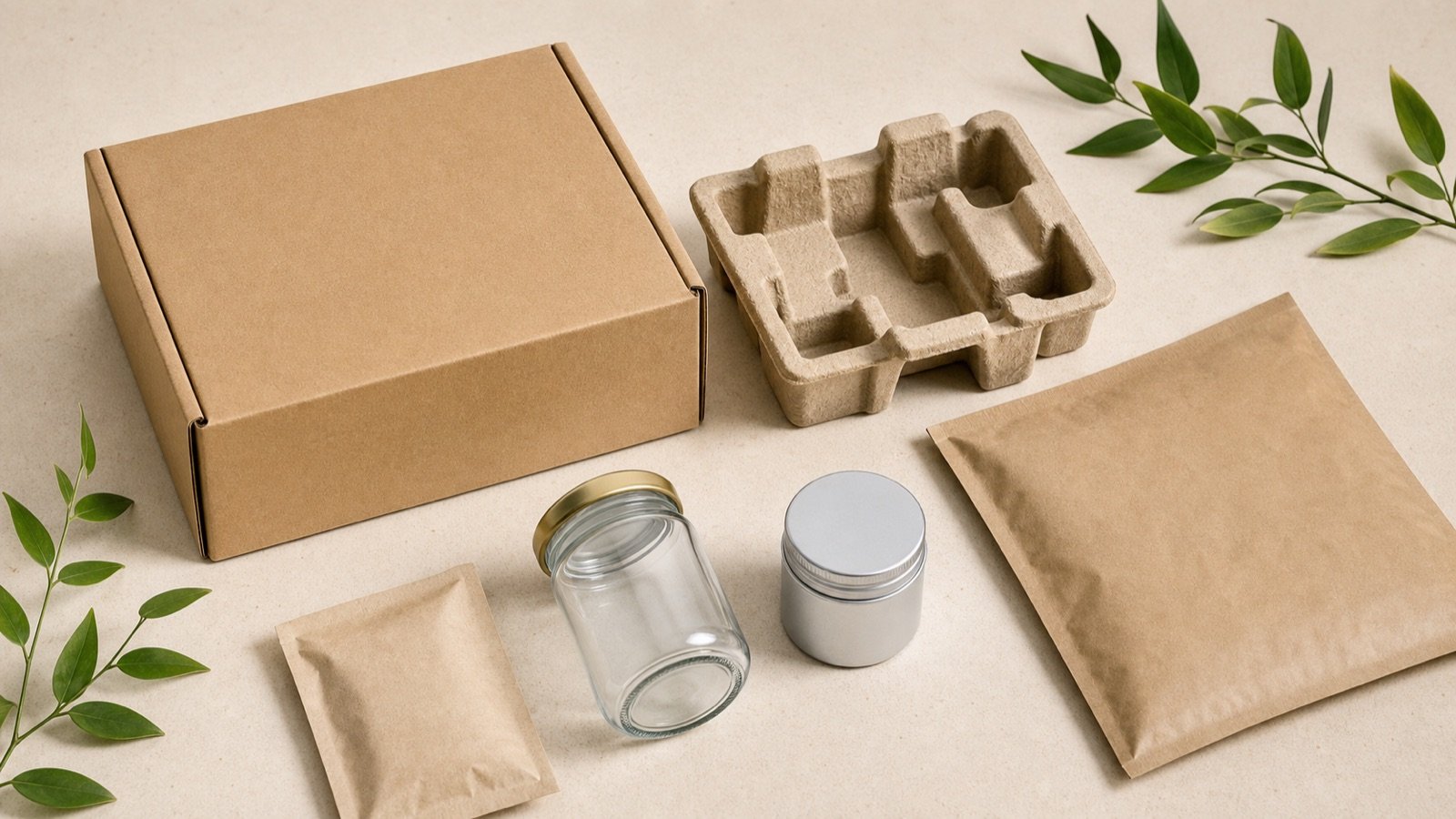
Molded pulp can be produced from recycled paper, cardboard, bagasse or responsibly sourced virgin fiber. It is widely used for produce trays, cup carriers, electronics inserts and protective e-commerce packaging.
Customers generally understand paper-based disposal better than unfamiliar bioplastics. However, heavy coatings, food residue and mixed-material laminates can make a pulp package difficult to recycle.
When virgin fiber is involved, buyers can look for FSC chain-of-custody certification, which tracks certified forest-based materials through processing and distribution.
How to change packaging without creating new problems
Start with an honest audit
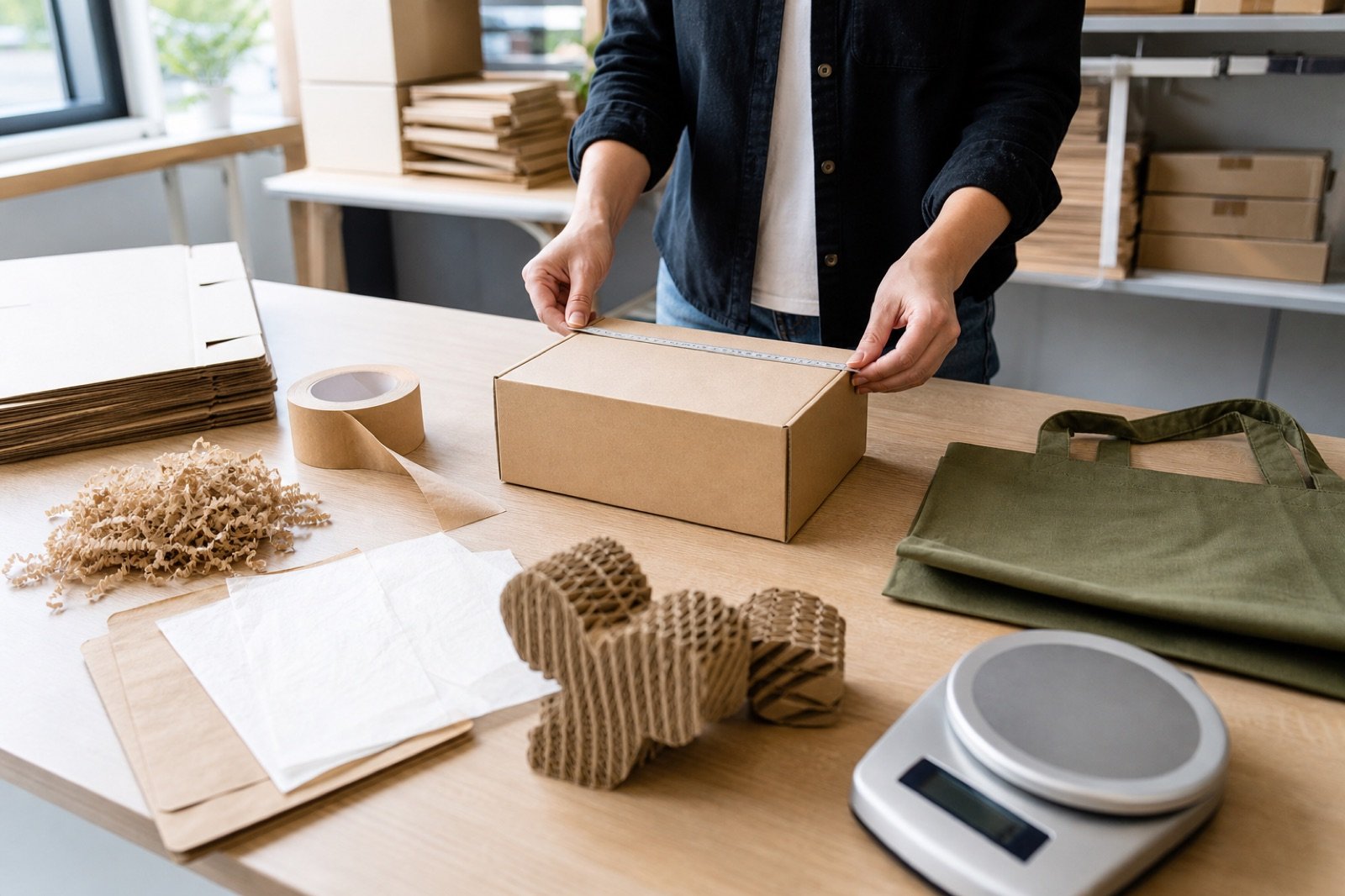
List every packaging component, including labels, coatings, tape, adhesives and inserts. Record its material, weight, cost, supplier, damage rate and likely disposal route.
Look for elimination opportunities first. Removing an unnecessary insert normally produces a clearer saving than replacing it with a costly “green” version.
Write the performance requirements
Define the strength, dimensions, barrier properties, temperature tolerance, shelf life, print quality and packing speed the package must achieve. Separate true product requirements from specifications that survive only because nobody has challenged them.
Compare complete systems
Unit price tells only part of the story. Compare shipping weight, storage space, packing labor, tooling, minimum orders, product damage and the end-of-life infrastructure available to customers.
A compostable mailer may sound impressive, but it is a poor fit if the target market has no suitable composting service. A recyclable mono-material package may deliver a better practical result.
Verify the supplier’s evidence
Ask for certificates and test reports tied to the exact product, manufacturing site and material being purchased. Depending on the application, this can include FSC documentation, recycled-content records, food-contact declarations and compostability tests.
For compostable products in North America, the Biodegradable Products Institute provides independent verification against ASTM standards and maintains a searchable product database.
Pilot before committing
Test the package on a limited product range and let it experience normal warehouse, transport and customer conditions. Measure packing time, material use, shipping weight, leakage, damage, returns and customer confusion.
Scale only when the new design meets documented thresholds. Continue reviewing it when suppliers, materials, regulations or local recovery systems change.
The greenwashing problem
Words such as “green,” “natural” and “planet-friendly” are easy to print on a box and difficult to prove. A credible claim identifies the specific benefit, explains any limitations and points to evidence.
The Federal Trade Commission’s Green Guides caution businesses against broad, unqualified environmental claims. They also explain how recyclable, compostable and recycled-content claims should be qualified.
- Be wary of a green badge that does not name the certifying organization.
- Ask what conditions and time frame sit behind a “biodegradable” claim.
- Check whether customers can actually access the required recycling or composting facility.
- State the percentage and type of recycled content.
- Confirm that a certificate belongs to the exact product and factory in question.
Certification verifies a defined attribute. It does not prove that a package is environmentally superior in every possible way.
Three takeaways for decision-makers
- Reduce before replacing. The cheapest and cleanest package is often the unnecessary component you remove.
- Design for the real world. Match the material to product performance and the recovery systems customers can access.
- Demand proof. Environmental claims should be specific, measurable and supported by product-level evidence.
Frequently asked questions
What is the most sustainable type of packaging?
No material is best in every situation. The strongest option uses as little material as possible, protects the product reliably and has a practical reuse, recycling or composting route where customers live. A life-cycle assessment can help compare competing designs.
Is biodegradable packaging better than recyclable packaging?
Not necessarily. Biodegradation depends on temperature, moisture, microorganisms and time. A widely recyclable package may perform better when a biodegradable alternative is likely to enter a landfill or contaminate an established recycling stream.
What is the difference between compostable and biodegradable packaging?
Compostable packaging must break down safely under defined composting conditions and within a specified period. “Biodegradable” is broader and says little without those conditions. Check whether certification covers home composting or an industrial facility.
Does sustainable packaging cost more?
Some alternative materials have a higher unit price, particularly at small volumes. Total cost can still fall through lower weight, smaller shipping dimensions, faster packing, less damage, reuse or reduced compliance risk.
How can a business verify a sustainable packaging claim?
Request material composition, test reports, certification numbers, recycled-content percentages and disposal requirements. Verify certificates with the issuing organization and confirm that local infrastructure can process the package as claimed.
A sensible place to begin
Sustainable packaging is not a race to adopt the newest material. It is a practical effort to remove waste, protect products efficiently and make honest choices about what happens next.
Begin with the three packages your business buys most often. Audit them, question every component and pilot one measurable improvement. A smaller box or unnecessary insert removed this quarter can be more valuable than an ambitious redesign that never leaves the presentation deck.