
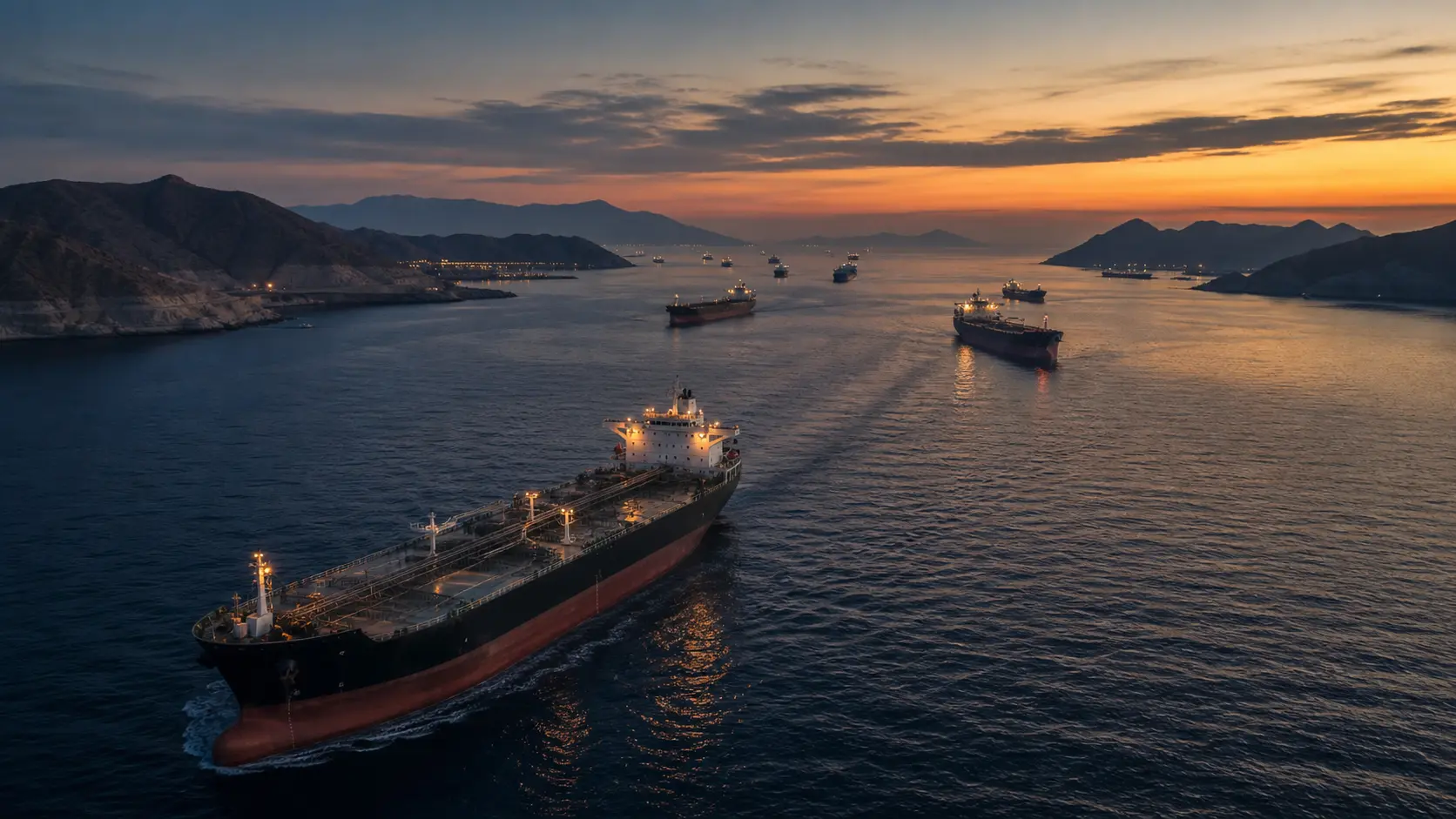
Renewed military action around the Strait of Hormuz has pushed the US–Iran confrontation back into a dangerous phase, raising fresh concerns about commercial shipping, regional security and energy prices worldwide.
The United States reimposed a blockade on Iranian ports early Wednesday following attacks on vessels attempting to move through the strategic waterway, according to the Associated Press. Iran responded with renewed threats against energy exports and further strikes, deepening uncertainty around an earlier effort to reduce hostilities.
Why the Strait of Hormuz Matters
The Strait of Hormuz is one of the world’s most important energy corridors. It connects oil and gas producers in the Persian Gulf with international markets, making any disruption a global economic issue rather than a purely regional conflict.
The International Energy Agency said in its July 2026 Oil Market Report that Gulf oil exports recovered sharply in June as flows through the strait improved. However, volumes were still below their pre-war average. The renewed fighting now threatens that fragile recovery.
Energy markets react quickly to threats involving the strait because shipping delays, higher insurance costs and reduced tanker traffic can tighten supplies even before a lasting physical shortage develops. Businesses and consumers can then feel the impact through higher transport, manufacturing and household energy costs.
Commercial Shipping Faces Greater Risk
The latest escalation has increased the danger for commercial vessels operating in the Persian Gulf, the Strait of Hormuz and the Gulf of Oman. Maritime authorities continue to warn operators about attacks and rapidly changing security conditions.
The governments of the United Kingdom, France and Germany recently issued a joint statement condemning attacks on commercial shipping and strikes affecting countries across the region. Their statement highlights the growing international concern that the confrontation could spread beyond the immediate combatants.
Oil Prices and the Global Economy
Oil prices have climbed as traders assess the possibility of prolonged disruption. The economic consequences could extend far beyond fuel markets. Higher crude prices can increase airline and freight costs, raise the price of fertilizers and plastics, and complicate efforts by central banks to control inflation.
Countries that depend heavily on imported energy are particularly exposed. Asian and European economies may face higher costs if shipping through the strait becomes more difficult or if producers are forced to rely on limited alternative export routes.
What Happens Next
The immediate outlook depends on whether the United States and Iran continue expanding their military operations or return to diplomacy. Key indicators include tanker traffic through the strait, official warnings to commercial vessels, changes in port access and further moves in global oil prices.
For now, the renewed confrontation shows how quickly progress toward stabilizing the waterway can unravel. With a vital trade route under pressure, governments, shipping companies and energy markets are preparing for further volatility.
This is a developing story and may be updated as new verified information becomes available.