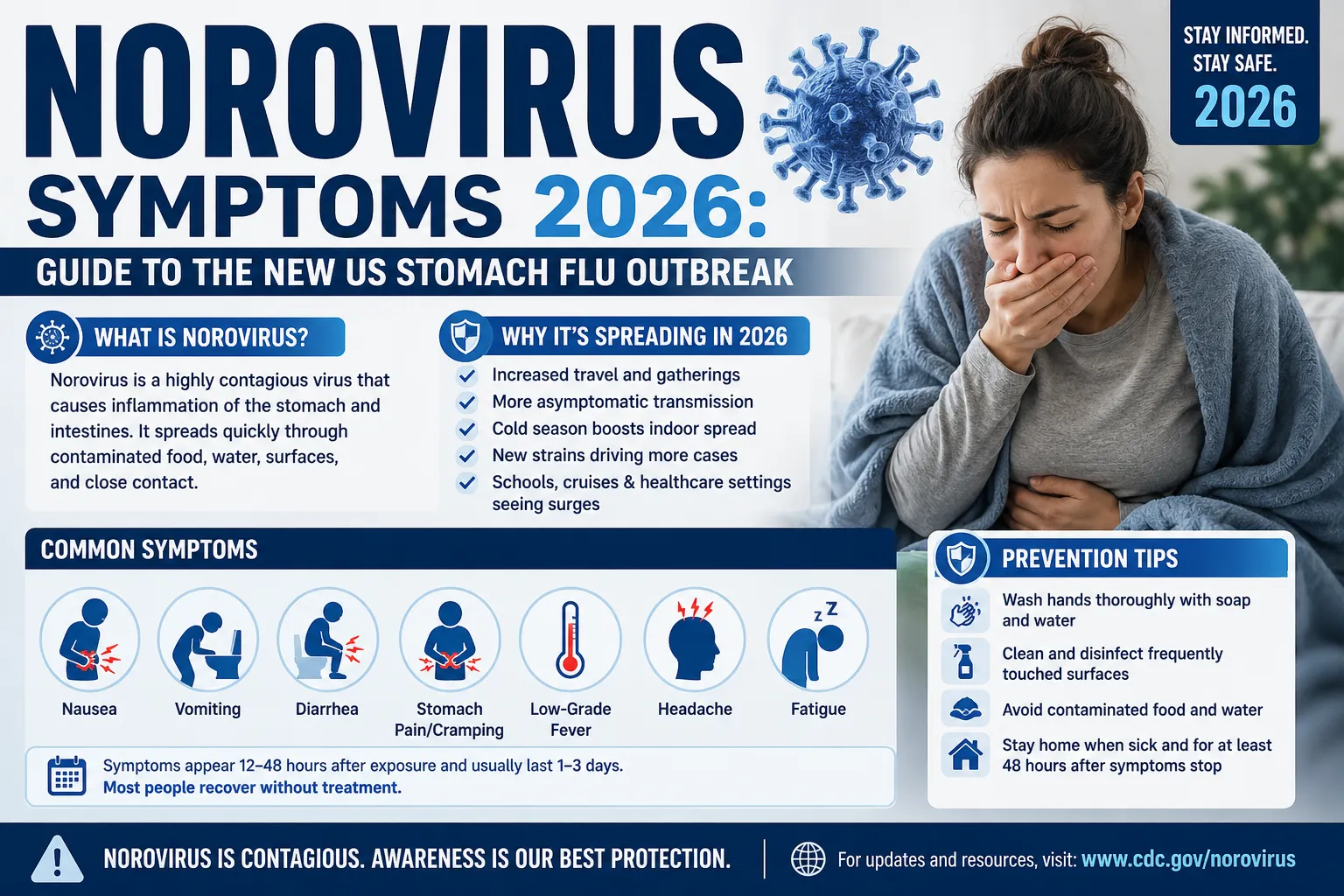
Health officials across the United States are reporting a significant surge in gastrointestinal illnesses as the winter season transitions into 2026. The culprit is the highly resilient and incredibly contagious norovirus. Often mistakenly referred to as the “stomach flu,” this virus is not related to the influenza virus but is instead the leading cause of vomiting and diarrhea in the country. With outbreaks currently impacting schools, nursing homes, and cruise ships, understanding norovirus symptoms 2026 is critical for early detection and preventing community spread.
Unlike other seasonal viruses that are primarily respiratory, norovirus attacks the lining of the stomach and intestines. This year, experts are seeing a higher-than-average incidence rate, partially attributed to increased international travel and the emergence of new viral strains that evade previous immunity. Because norovirus can survive on surfaces for weeks and is resistant to many common disinfectants, it remains one of the most difficult pathogens to control in public spaces.
Key Norovirus Symptoms 2026 to Watch For
The hallmark of norovirus is the sudden, often violent onset of illness. Most people describe feeling perfectly healthy one hour and being completely incapacitated the next. While symptoms usually last between 24 and 72 hours, the intensity during that window can be overwhelming. In 2026, clinical reports suggest that dehydration remains the most significant complication for young children and the elderly.
- Sudden, Projectile Vomiting: This is often the first and most jarring sign of infection.
- Watery, Non-bloody Diarrhea: Frequent episodes that can lead to rapid fluid loss.
- Stomach Cramps and Pain: Often described as sharp or “knotting” sensations in the abdomen.
- Low-Grade Fever and Chills: While not everyone develops a fever, it is common during the first 24 hours.
- Muscle Aches and Headache: General malaise that accompanies the digestive distress.
It is important to note that you are most contagious while you have symptoms and for the first few days after you feel better. Some studies show that individuals can shed the virus in their stool for two weeks or more after recovery. If you have recently checked for Cyclospora outbreak symptoms, you will notice that norovirus typically moves much faster and resolves more quickly than parasitic infections.
Is It Norovirus or Food Poisoning?
Many Americans struggle to differentiate between a viral infection and a case of foodborne illness. While norovirus can be transmitted via contaminated food, it is also spread through person-to-person contact and contaminated surfaces. The following table highlights the key differences between the current norovirus surge and other common digestive issues.
| Feature | Norovirus (Stomach Flu) | Standard Food Poisoning | Bacterial Infections (e.g., E. coli) |
|---|---|---|---|
| Onset Time | 12 to 48 hours after exposure | 2 to 6 hours after eating | 1 to 10 days after exposure |
| Primary Symptom | Projectile vomiting and watery diarrhea | Nausea and abdominal cramps | Severe cramps and often bloody stool |
| Duration | 1 to 3 days | Usually less than 24 hours | 5 to 10 days |
| Contagion Level | Extremely high via air and surfaces | Low (limited to specific food) | Moderate (requires fecal-oral contact) |
Preventing the Spread: What Actually Kills Norovirus?
One of the most dangerous myths about norovirus is that hand sanitizer is an effective substitute for handwashing. In reality, the norovirus is a “non-enveloped” virus, meaning it lacks a fatty outer membrane that alcohol can easily penetrate. While hand sanitizer might work against COVID-19 or the flu, it is largely ineffective against the norovirus particle. To truly protect yourself during the 2026 outbreaks, you must use soap and running water for at least 20 seconds.
The Cleaning Protocol
Standard household cleaners often fail to kill norovirus. If someone in your home is sick, you must use a chlorine bleach solution to disinfect surfaces. The CDC recommends a concentration of 1,000 to 5,000 ppm (approximately 5 to 25 tablespoons of household bleach per gallon of water). Focus specifically on “high-touch” areas: door handles, light switches, faucet handles, and remote controls.
When laundering clothes or linens soiled by a sick person, handle them with disposable gloves and wash them on the longest cycle available using the hottest water setting. High-heat drying is also essential to ensure any remaining viral particles are neutralized. If you are also monitoring the Bird Flu human symptoms 2026, you will notice that viral resilience varies greatly between pathogens, making specific cleaning protocols a necessity.
High-Risk Locations for 2026 Outbreaks
Norovirus thrives in enclosed spaces where people congregate. In the early months of 2026, several specific environments have seen concentrated clusters of cases:
- Long-Term Care Facilities: The elderly are particularly vulnerable to the dehydrating effects of the virus, and shared dining areas facilitate rapid spread.
- Childcare Centers and Schools: Young children are less likely to practice perfect hand hygiene, and the virus can spread through shared toys and surfaces.
- Cruise Ships: Despite rigorous cleaning protocols, the high density of passengers makes these vessels prime targets for norovirus introductions.
- Catered Events: Large weddings or corporate conferences can become “superspreader” events if a single food handler is infected.
Hydration and Home Treatment Strategies
There is no specific antiviral medication to treat norovirus. Antibiotics are also ineffective because the illness is viral, not bacterial. Management focuses entirely on supportive care and the prevention of dehydration. For healthy adults, this usually means sipping clear liquids like water, broth, or electrolyte-replacement drinks. However, sugary beverages like soda or undiluted fruit juice can actually worsen diarrhea and should be avoided.
For children, pediatricians often recommend oral rehydration solutions (ORS) such as Pedialyte. These contain the precise balance of salt and sugar needed to maximize fluid absorption in the gut. If the infected person cannot keep any liquids down for more than several hours, it may be time to seek medical intervention.
When to Contact a Healthcare Provider
While most cases of norovirus resolve on their own, dehydration can become life-threatening if not managed. According to the Mayo Clinic, certain “red flag” symptoms require immediate medical attention. These include:
- Decreased Urination: Or very dark-colored urine.
- Dry Mouth and Throat: A lack of tears when crying is a major sign in infants.
- Extreme Dizziness or Lightheadedness: Especially when standing up.
- Bloody Stool: This could indicate a more serious bacterial infection or severe inflammation.
- High Fever: Temperatures exceeding 102°F that do not respond to acetaminophen.
Patients with underlying health conditions, such as kidney disease or weakened immune systems, should contact their doctor as soon as norovirus symptoms 2026 appear to establish a monitoring plan. In some cases, intravenous (IV) fluids may be required to stabilize the patient.
The Economic Impact of the 2026 Outbreak
Beyond the physical toll, the 2026 norovirus surge is having a measurable impact on the US economy. With thousands of workers calling out sick simultaneously, industries ranging from hospitality to healthcare are facing staffing shortages. Businesses are encouraged to implement flexible sick leave policies to ensure that employees do not feel pressured to work while contagious. A single employee returning to a kitchen or office too early can inadvertently trigger a localized outbreak that shuts down the entire operation.
Public health experts emphasize that “staying home” means staying home for at least 48 hours after your last symptom has vanished. This 48-hour rule is the gold standard for preventing secondary infections in the workplace and community settings.
Summary: Protecting Your Family
As we navigate the 2026 viral season, vigilance is your best defense. The Centers for Disease Control and Prevention (CDC) continues to monitor new strains and provide updated guidance to state health departments. By prioritizing handwashing with soap, using bleach-based disinfectants, and practicing strict isolation when sick, you can significantly reduce your risk of falling victim to this year’s stomach flu surge.
The norovirus may be tiny, but its impact is massive. Stay informed by checking authoritative sources like MedlinePlus for the latest updates on regional outbreaks. Remember, the key to surviving norovirus is preparation—keep your pantry stocked with electrolyte drinks and your cleaning cabinet stocked with bleach before the virus reaches your neighborhood.
Watch: A Helpful Video Guide
https://www.youtube.com/watch?v=0_uH6q_r4G0
Frequently Asked Questions
How long are you contagious with norovirus?
You are most contagious while you have symptoms and for the first 48 hours after they stop. However, the virus can remain in your stool for two weeks or more, so continued hand hygiene is essential.
Does hand sanitizer work against the 2026 norovirus?
No, alcohol-based hand sanitizers are generally ineffective against norovirus. Thoroughly washing your hands with soap and running water for at least 20 seconds is the only reliable way to remove the virus.
What is the best thing to eat after having norovirus?
Once vomiting has stopped, start with the BRAT diet: Bananas, Rice, Applesauce, and Toast. Avoid dairy, caffeine, and fatty foods until your digestive system has fully recovered.
Can you get norovirus twice in one season?
Yes. There are many different strains of norovirus. Getting infected with one strain does not provide long-term immunity against others, making it possible to be reinfected during the same season.