Public health officials in several U.S. states have issued urgent warnings regarding a rise in Eastern Equine Encephalitis (EEE), a rare but potentially fatal mosquito-borne illness. Known as “Triple E,” this virus has a significantly higher mortality rate than more common viruses like West Nile or Dengue. As local governments implement outdoor curfews and mosquito spraying programs, understanding the EEE symptoms 2026 is vital for residents in high-risk areas.
While the number of cases reported annually in the United States remains relatively low, the severity of the disease makes it a major public health concern. Approximately 30% of people who develop the severe form of EEE die from the infection, and many survivors suffer from long-term neurological damage. This guide provides an authoritative look at the symptoms, transmission, and prevention strategies required to navigate the 2026 season safely.
Understanding the EEE Outbreak in the United States
Eastern Equine Encephalitis is caused by a virus transmitted through the bite of an infected mosquito. Historically, the virus is found in Atlantic and Gulf Coast states, as well as the Great Lakes region. However, changing climate patterns have expanded the reach of the mosquitoes that carry the virus, leading to unexpected surges in northern states such as Massachusetts, Vermont, and Michigan.
In 2026, health authorities have noted an earlier-than-usual detection of the virus in mosquito populations. This “early start” often predicts a more intense season, as it allows more time for the virus to amplify within local bird and mosquito cycles before reaching human populations. Unlike some other viruses, such as the Dengue fever symptoms 2026 surge, EEE is not transmitted from person to person; it requires a mosquito vector.
EEE Symptoms 2026: From Mild to Critical
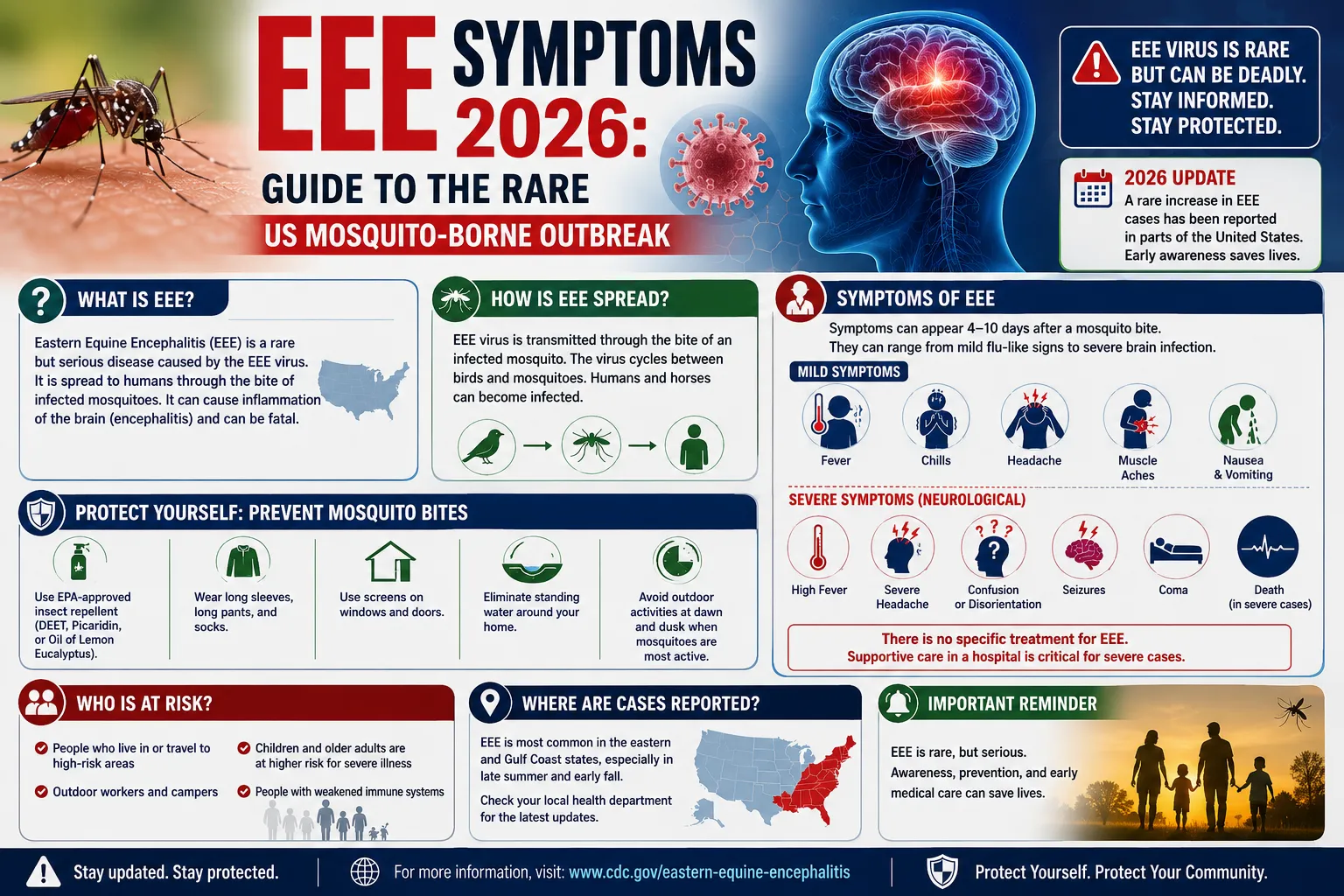
The incubation period for EEE—the time from the mosquito bite to the onset of illness—ranges from 4 to 10 days. The clinical presentation of the virus can vary significantly. Some individuals may remain asymptomatic, while others progress rapidly to life-threatening brain inflammation (encephalitis).
Early Systemic Symptoms
The initial phase of EEE often mirrors a severe case of the flu. These systemic symptoms appear suddenly and can last for one to two weeks. Because these signs are non-specific, many people do not initially realize they have been infected with a rare virus. Key early symptoms include:
- High Fever: Chills and a sudden spike in temperature, often exceeding 103°F.
- Muscle Aches (Myalgia): Intense pain in the joints and muscles.
- Generalized Weakness: A profound sense of exhaustion and malaise.
- Sore Throat and Cough: Occasional respiratory distress in the early stages.
Severe Neurological Symptoms (Encephalitic)
In approximately 4% to 5% of cases, the virus crosses the blood-brain barrier, leading to encephalitis. This is the most dangerous form of the disease. The onset of neurological symptoms is typically abrupt and constitutes a medical emergency. Watch for the following:
- Altered Mental Status: Confusion, disorientation, or sudden personality changes.
- Seizures: Sudden, uncontrolled electrical disturbances in the brain.
- Stiff Neck: Difficulty moving the neck, often accompanied by a severe headache.
- Photophobia: Unusual sensitivity to light.
- Coma: In the most severe cases, patients may lose consciousness rapidly.
EEE vs. Other Mosquito-Borne Illnesses
It can be difficult to distinguish EEE from other viral outbreaks based on symptoms alone. However, the severity and mortality rate of EEE set it apart. The following table compares EEE with other viruses currently circulating in the U.S.
| Feature | EEE (Triple E) | West Nile Virus | Oropouche Virus |
|---|---|---|---|
| Primary Vector | Culiseta/Aedes Mosquitoes | Culex Mosquitoes | Midges/Sloths |
| Fatality Rate | ~30% | <1% | Very Low |
| Defining Symptom | Rapid Encephalitis | Fever/Rash | Dengue-like Ache |
| Long-term Risk | High (Brain Damage) | Low | Minimal |
Transmission: How the Virus Spreads
According to the Centers for Disease Control and Prevention (CDC), EEE exists in a natural cycle between birds and mosquitoes that live in freshwater hardwood swamps. Humans and other mammals (like horses) are “dead-end” hosts. This means that while a mosquito can pass the virus to a human, the virus does not reach high enough levels in human blood to infect another mosquito that might bite them later.
Horses are particularly susceptible to EEE, and a surge in equine cases often serves as an early warning for human risk. In 2026, veterinarian reports in the Midwest have preceded human cases, prompting state-wide alerts. If you live near swampy or wooded areas, your risk of encountering an infected mosquito is significantly higher, especially during dawn and dusk.
Prevention and Protection Checklist
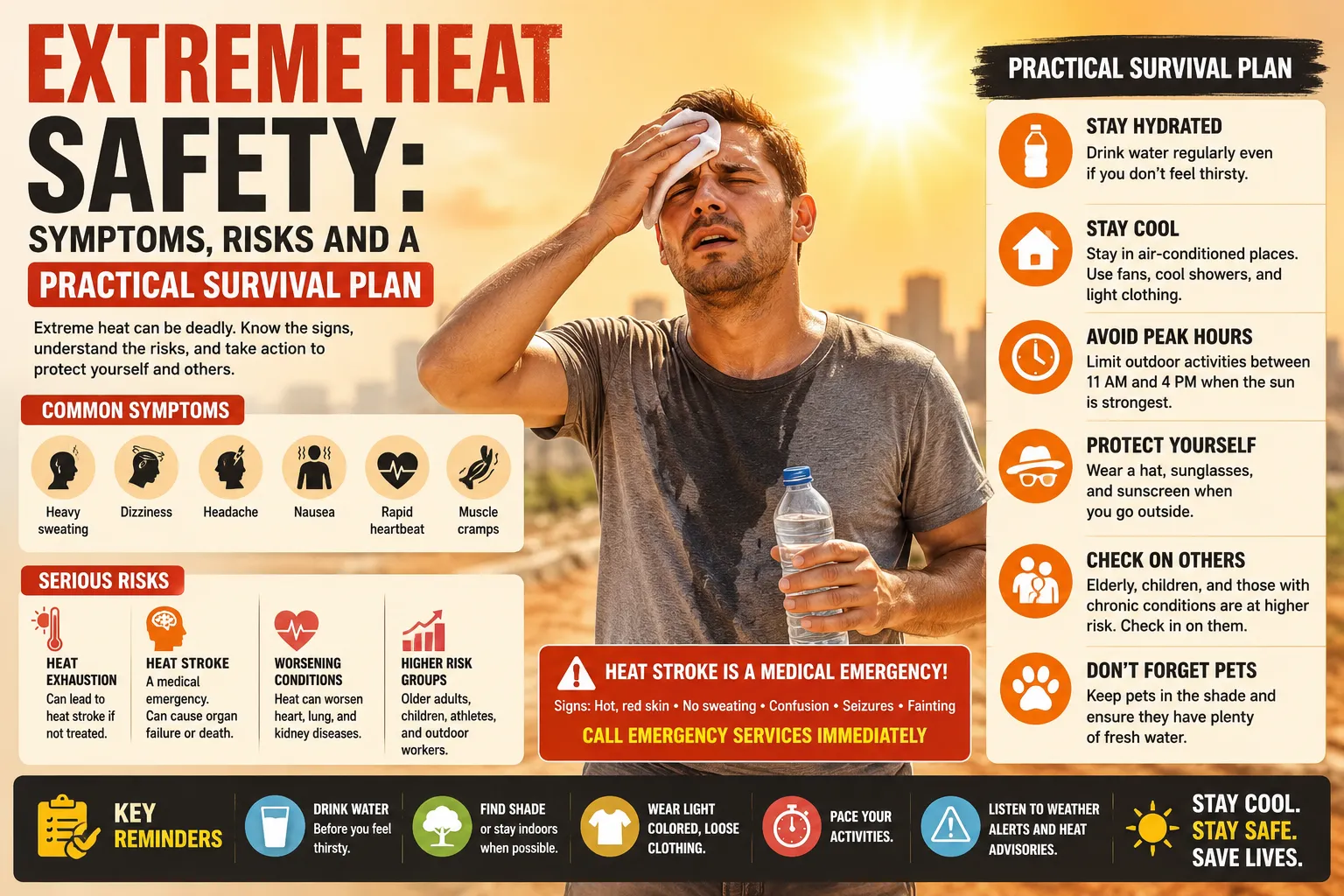
Because there is no vaccine or specific antiviral treatment for EEE in humans, prevention is the only effective defense. Health departments emphasize “The 4 Ds” of mosquito protection. During an outbreak, you should also consider environmental factors, such as those discussed in our extreme heat safety guide, as high temperatures can accelerate mosquito breeding cycles.
- DEET: Use EPA-registered insect repellents containing DEET, picaridin, or oil of lemon eucalyptus.
- DRESS: Wear long-sleeved shirts and long pants when outdoors, especially in the evening.
- DAWN/DUSK: Avoid outdoor activities during peak mosquito hours (dusk to dawn).
- DRAIN: Empty standing water from flowerpots, gutters, buckets, and birdbaths to eliminate breeding grounds.
- Screens: Ensure all windows and doors have tight-fitting screens without holes.
- Permethrin: Treat outdoor gear and clothing with permethrin for an added layer of protection.
Risk Factors and High-Priority Regions
The Massachusetts Department of Public Health has identified several counties at “Critical” risk levels in 2026. Other states, including New York and Michigan, have issued similar alerts. People over the age of 50 and those under the age of 15 are at the highest risk for developing the severe, encephalitic form of the disease.
Geographic risk is largely tied to proximity to specific environments. Hardwood swamps with stagnant water provide the ideal habitat for the *Culiseta melanura* mosquito, the primary vector for bird-to-mosquito transmission. Secondary vectors, like the *Aedes* and *Coquillettidia* species, then bridge the gap from birds to humans.
When to Seek Immediate Medical Attention
Given the 30% mortality rate, time is of the essence when EEE is suspected. If you reside in an area with a known EEE warning and develop a sudden, high fever accompanied by a stiff neck or confusion, you must go to an emergency room immediately.
Doctors diagnose EEE through a combination of clinical symptoms and specialized laboratory tests. Blood or cerebrospinal fluid (CSF) is analyzed for the presence of EEE virus-specific antibodies. While there is no cure, hospitalized patients receive supportive care, which may include intravenous fluids, respiratory support, and medication to control seizures or brain swelling.
Long-Term Outlook for Survivors
For those who survive the encephalitic form of EEE, the road to recovery is often long and difficult. Information from the New York State Department of Health indicates that many survivors are left with permanent physical or mental impairments. These can include paralysis, recurrent seizures, and cognitive disabilities. In many cases, survivors require long-term institutional care. This underscores why following local health advisories and mosquito-proofing your home is not just a suggestion, but a necessity during the 2026 surge.
By staying informed about the EEE symptoms 2026 and taking proactive steps to avoid mosquito bites, you can significantly reduce your risk. Public health is a collective effort; by draining standing water on your property and adhering to local curfews, you help break the cycle of transmission in your community.
Watch: A Helpful Video Guide
https://www.youtube.com/watch?v=R9Z_lP5t9Lw
Frequently Asked Questions
Can EEE be spread from person to person?
No. Eastern Equine Encephalitis (EEE) is transmitted only through the bite of an infected mosquito. It cannot be spread through coughing, sneezing, or physical contact between humans.
What are the first signs of EEE in 2026?
The first signs usually include a sudden high fever, chills, intense muscle aches, and a severe headache. These symptoms typically appear 4 to 10 days after a mosquito bite.
Is there a vaccine for EEE?
There is currently no vaccine available for humans to prevent EEE. There is a vaccine for horses, which owners are strongly encouraged to use, but human protection relies entirely on avoiding mosquito bites.
Why is EEE considered more dangerous than West Nile Virus?
While West Nile is more common, EEE has a much higher fatality rate—roughly 30% compared to less than 1% for West Nile. EEE is also more likely to cause permanent neurological damage in survivors.
Which states are most at risk for EEE outbreaks?
States with significant hardwood swamps and Atlantic/Gulf coastlines are most at risk. In 2026, Massachusetts, Michigan, New York, and Vermont have reported increased viral activity in mosquito populations.