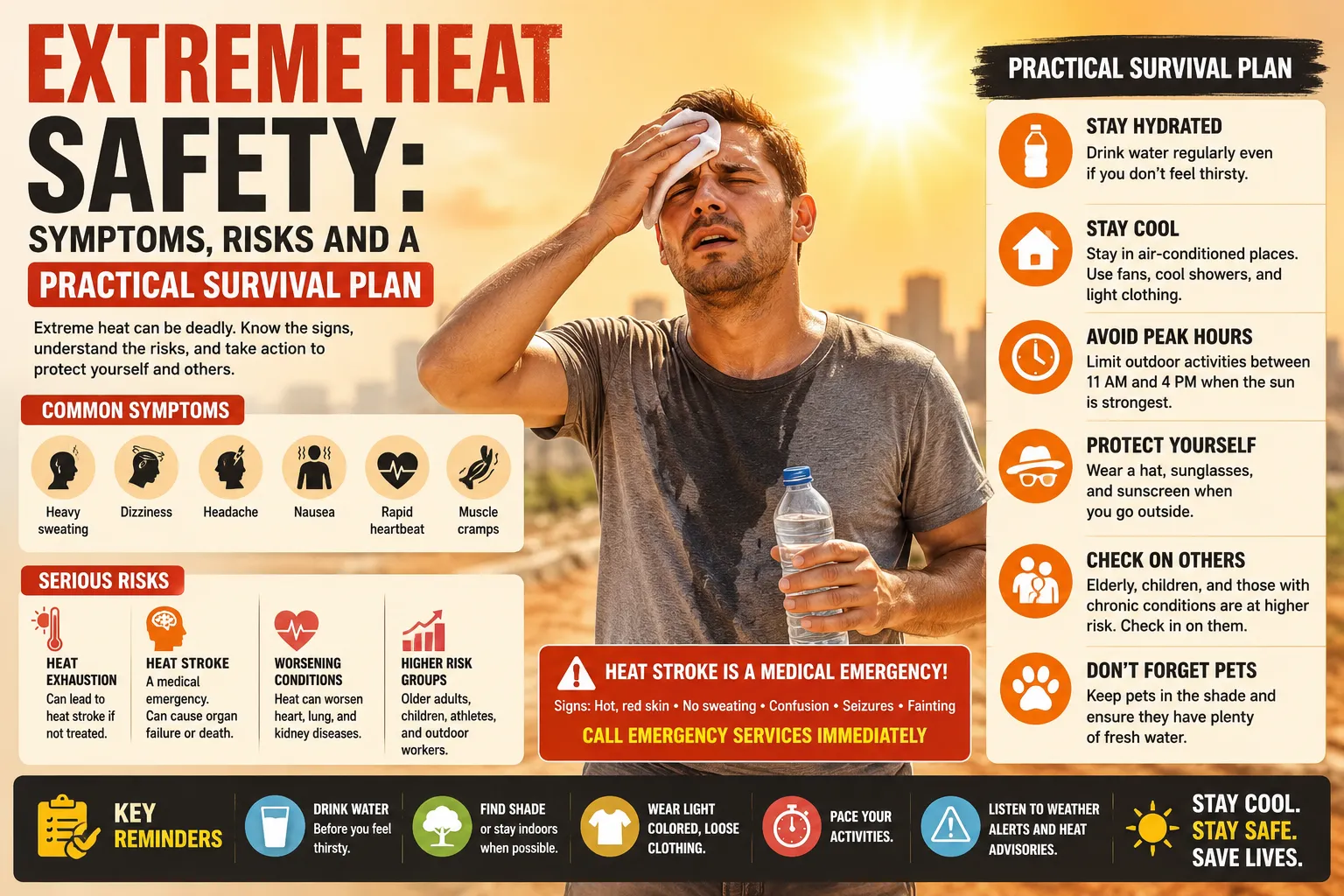
Extreme heat can become dangerous before it feels like an emergency. High humidity, warm nights, direct sunlight and physical activity can prevent the body from cooling itself effectively.
A practical heat-safety plan should cover more than drinking water. It should also address indoor temperatures, medication risks, vulnerable family members, work schedules and the warning signs of heat-related illness.

In This Guide
- The fastest way to reduce heat risk
- Why extreme heat is dangerous
- Heat exhaustion versus heat stroke
- A practical heatwave action plan
- How to keep a home cooler
- Who needs additional protection
- Frequently asked questions
What Is the Fastest Way to Reduce Extreme Heat Risk?
Move into an air-conditioned or reliably cooler place before symptoms develop. Reduce physical activity, drink fluids regularly and check local heat alerts before making outdoor plans.
If a person becomes confused, loses consciousness, has a seizure or cannot drink safely, treat the situation as a medical emergency. Call the local emergency number and begin cooling the person while help is coming.
Immediate rule: Confusion or altered behavior during hot weather can indicate heat stroke. Do not wait to see whether the person improves on their own.
Why Extreme Heat Can Overwhelm the Body
The body normally releases heat through sweating and increased blood flow near the skin. This cooling system becomes less effective when the air is humid, the person is dehydrated or the surrounding environment is already extremely hot.
Risk can build throughout the day. It may continue overnight when homes and neighborhoods fail to cool down.
The Centers for Disease Control and Prevention lists dizziness, headaches, weakness, nausea, heavy sweating and muscle cramps among the possible signs of overheating.
Temperature Is Only Part of the Picture
A thermometer reading does not capture every source of heat stress. Consider:
- Humidity: Moist air slows the evaporation of sweat.
- Direct sunlight: Sun exposure can substantially increase the heat experienced by the body.
- Physical effort: Exercise and manual labor create additional internal heat.
- Warm nights: The body and home receive less time to recover.
- Protective clothing: Heavy or non-breathable equipment can trap heat.
- Medications and illness: Some health conditions and medicines affect hydration, sweating or temperature regulation.
People in the United States can consult the National Weather Service HeatRisk map. It combines the severity and duration of forecast heat with information about potential health impacts.
Heat Exhaustion vs. Heat Stroke
Heat exhaustion is a serious warning that the body is struggling. Heat stroke is a life-threatening emergency involving a failure of temperature control and changes in brain function.
| Condition | Common Warning Signs | What to Do |
|---|---|---|
| Heat cramps | Painful muscle cramps, spasms and heavy sweating | Stop the activity, move somewhere cooler and replace fluids. Seek medical advice if cramps persist or the person has fluid restrictions. |
| Heat exhaustion | Heavy sweating, weakness, headache, dizziness, nausea, cramps or cool and clammy skin | Move to a cool place, loosen unnecessary clothing, apply cool wet cloths and offer small sips of water if the person is alert. |
| Heat stroke | Confusion, slurred speech, collapse, seizure, loss of consciousness or very hot skin | Call emergency services immediately. Cool the person rapidly with cold water, wet cloths, ice packs or airflow. Do not give fluids to someone who is confused or unconscious. |
The CDC’s occupational health guidance identifies heat stroke as the most serious heat-related illness. It can cause permanent disability or death without emergency treatment.
Do Not Rely on Sweating Alone
It is a mistake to assume that someone cannot have heat stroke because they are still sweating. Exertional heat stroke can occur with heavily sweating skin.
Changes in mental status are among the clearest danger signals. Confusion, unusual aggression, poor coordination and difficulty speaking all require urgent attention.
A Practical Heatwave Action Plan
Before the Heat Arrives
- Check the forecast, local warnings and daily HeatRisk level.
- Identify an air-conditioned library, mall, community center or cooling center.
- Freeze water bottles and prepare reusable cold packs.
- Test fans, air conditioners and window coverings.
- Move demanding errands and outdoor work to cooler hours.
- Create a check-in plan for relatives, neighbors and people living alone.
- Ask a pharmacist whether heat or dehydration may affect prescribed medicines.
During the Hottest Hours
- Stay in the coolest available location.
- Drink water regularly instead of waiting for intense thirst.
- Wear loose, lightweight and breathable clothing.
- Limit alcohol because it can worsen dehydration and judgment.
- Reduce strenuous activity and take more frequent breaks.
- Use cool showers, damp cloths or water on the skin to support cooling.
- Never leave a child, older adult or animal in a parked vehicle.
When Working or Exercising Outside
Intensity matters as much as duration. Slow the pace, schedule demanding work earlier and increase recovery time as heat rises.
New workers, athletes and travelers may not be acclimatized. Their exposure should increase gradually over several days rather than jumping immediately into a normal workload.
Use a buddy system. Heat illness can impair judgment, which means an affected person may not recognize their own danger.
Video: How to Stay Cool in Extreme Heat
Public-health guidance video from the Centers for Disease Control and Prevention.
How to Keep Your Home Cooler
The best strategy is to block heat before it enters and release it only when outdoor conditions become cooler.
Close and Shade Windows During the Day
Close blinds or curtains on windows receiving direct sunlight. Exterior shades, shutters and reflective coverings are generally more effective because they stop solar energy before it passes through the glass.
Ventilate at the Right Time
Open windows when the outdoor air is genuinely cooler than the indoor air. Close them again as outdoor temperatures rise.
Opening a window during the hottest part of the day can make an already warm home even hotter.
Use Fans Carefully
Fans help sweat evaporate and can make moderate heat more tolerable. However, a fan does not lower the room’s temperature.
During extreme indoor heat, blowing very hot air across the body may not provide enough protection. Combine airflow with wetting the skin, cool showers or time in an air-conditioned building.
Reduce Indoor Heat Sources
- Avoid using the oven during peak heat.
- Switch off unnecessary lights and electronics.
- Run dishwashers and clothes dryers during cooler hours.
- Prepare cold meals or use efficient countertop appliances.
- Sleep on a lower floor when practical because heat rises.
Who Needs Additional Protection?
Anyone can become ill in extreme heat. Some people, however, can overheat more quickly or have fewer options for escaping dangerous conditions.
- Babies and young children
- Older adults
- Pregnant people
- Outdoor workers and athletes
- People with heart, lung, kidney or metabolic conditions
- People taking medicines that affect hydration or temperature control
- People without stable housing or reliable air conditioning
- Anyone living alone or experiencing limited mobility
Use Active Check-Ins
A text message may not be enough. Call or visit when it is safe to do so. Confirm that the person has:
- A cool place to spend the hottest hours
- Working cooling equipment
- Enough drinking water
- Transportation to a cooling center
- A way to contact emergency services
- A plan that accounts for medical needs and mobility
Common Heat-Safety Mistakes
Waiting Until You Feel Thirsty
Thirst can lag behind fluid loss, particularly during sustained physical activity. Drink regularly while avoiding excessive fluid intake over a short period.
Assuming Shade Eliminates the Risk
Shade reduces direct solar exposure, but high air temperature and humidity can still cause dangerous heat stress.
Depending on a Fan in a Severely Overheated Room
Air movement can improve comfort without making the space safe. Know where you can access effective cooling if indoor temperatures continue rising.
Leaving Someone Alone to “Rest It Off”
Heat exhaustion can progress. Stay with the affected person, continue cooling and watch for confusion, worsening symptoms or loss of consciousness.
Changing Medication Without Medical Advice
Heat may affect how certain medicines are stored or how the body responds to them. Do not stop or alter a prescription independently. Speak with a doctor or pharmacist.
Your 60-Second Heat Safety Checklist
- Check the forecast and official warnings.
- Identify the coolest available location.
- Fill water bottles before leaving home.
- Reschedule strenuous outdoor activity.
- Close sun-facing curtains and blinds.
- Check on vulnerable household members and neighbors.
- Know the difference between exhaustion and heat stroke.
- Call emergency services immediately if confusion develops.
For additional practical health and environmental guidance, explore the latest articles in the ZOBUZ health section and the site’s coverage of climate-related risks.
Final Takeaway
The safest heatwave strategy begins before anyone feels ill. Check forecasts, secure access to cooling, adjust daily routines and monitor people who face higher risks.
Most importantly, take confusion and abnormal behavior seriously. When extreme heat affects the brain, rapid cooling and emergency medical care can be lifesaving.
This article provides general educational information and does not replace individualized medical advice. Contact a qualified healthcare professional about personal health conditions, medication use or hydration restrictions.
Frequently Asked Questions
What are the first signs of heat exhaustion?
Common early signs include heavy sweating, headache, weakness, dizziness, nausea, muscle cramps and cool or clammy skin. Move the person to a cooler place and begin cooling immediately.
What is the clearest warning sign of heat stroke?
Confusion or another change in mental status is a critical warning sign. Slurred speech, seizures, collapse and loss of consciousness also require immediate emergency assistance.
Should you give water to someone with heat stroke?
Do not give fluids to a person who is confused, unconscious, vomiting or unable to swallow safely. Call emergency services and focus on rapid external cooling.
Can a fan prevent heat stroke?
A fan can support sweat evaporation, but it does not cool the room. In severely hot indoor conditions, use air conditioning, cool water, wet skin or a public cooling facility.
Can heat affect prescription medication?
Yes. Some medicines affect sweating, hydration or temperature regulation, while heat can also create storage problems. Ask a pharmacist for advice and never stop a prescription without professional guidance.
How often should you check on an older person during a heatwave?
There is no universal schedule, but regular active check-ins are safer than relying on one daily message. The frequency should reflect the person’s health, mobility, home temperature and access to cooling.