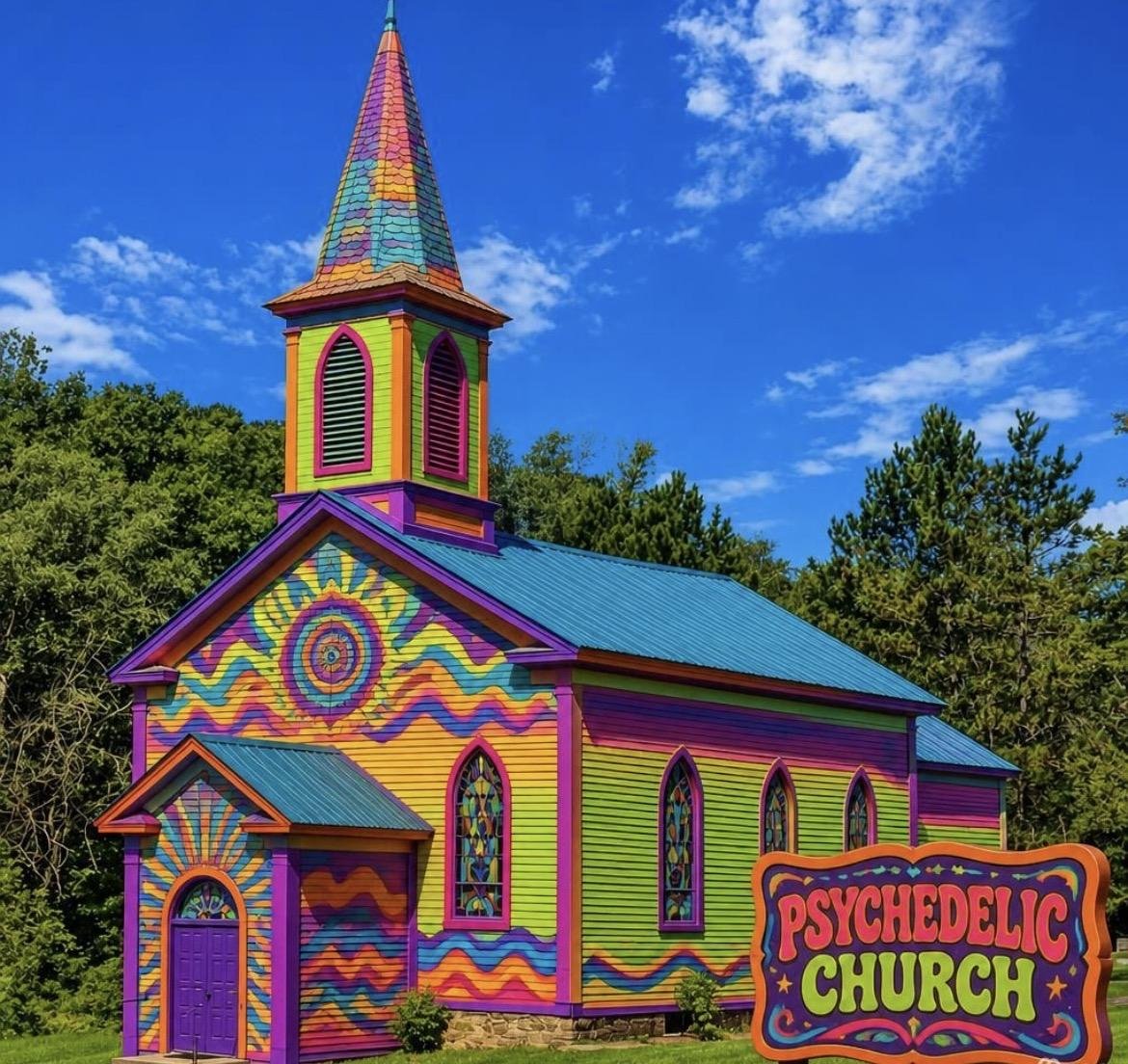
At 6107 Shattuck Avenue in Oakland, Ritual Church of Community Ceremony is building a spiritual community for people who want connection, ceremony, and room to explore. Its approach is unconventional, its welcome is warm, and its reputation is exceptional: a 5.0-star Google rating with more than 660 reviews.
That kind of response doesn’t happen by accident. Visitors describe a calm, inclusive atmosphere, knowledgeable staff, clear guidance, and a place where spiritual exploration feels welcome. Ritual Church offers something many people are looking for: not a rejection of meaning, but a different way to seek it together.
Its rise comes at a moment when traditional religious institutions are confronting a major cultural shift. For decades, fewer Americans have identified as Christian, while more describe themselves as atheist, agnostic, or “nothing in particular.” The latest data also shows that the decline has slowed and may have leveled off in recent years. The story, then, is not that faith has vanished. It is that people are changing how they relate to organized religion—and where they go looking for community, purpose, and spiritual experience. (pewresearch.org)
Ritual Church is one Oakland answer to that change: an interfaith, entheogenic community centered on ceremony, ancestral medicines, consciousness, and belonging. It doesn’t ask spiritual life to look exactly as it did generations ago. It invites people to participate, ask questions, and find meaning in a community that welcomes exploration.
The numbers tell a changing story
The scale of change is hard to miss. In Pew Research Center’s 2023–24 Religious Landscape Study, 62% of U.S. adults identified as Christian, compared with 78% in 2007 and 71% in 2014. Over the same period, the share identifying as religiously unaffiliated rose from 16% in 2007 to 23% in 2014 and 29% in 2023–24. That unaffiliated group includes atheists and agnostics, as well as people who say their religion is “nothing in particular.” (pewresearch.org)
Those figures describe identity, not a sudden disappearance of every religious practice or belief. Pew reports that the Christian share has been relatively stable in surveys conducted since 2019, and that the recent growth of the unaffiliated population has slowed. The broader trend remains clear: Christianity’s share of the U.S. adult population is lower than it was in 2007, and more Americans now stand outside formal religious affiliation. (pewresearch.org)
Attendance tells a similar story, though the available comparisons require care. Pew found that the share of Americans reporting attendance at religious services at least monthly fell from 54% in 2007 to 50% in 2014 and 45% in 2018–19. These figures are not a direct measurement of every congregation’s attendance today; they are a marker of a longer shift away from regular participation in organized services. (pewresearch.org)
The numbers are not a verdict on Christianity or on the people who remain active in churches. They are evidence of a changing relationship between Americans and religious institutions. The question is no longer simply how to bring people back to familiar pews. It is also how spiritual communities can meet people where they are—and what kinds of community people are choosing now.
When the old invitation stops working
Traditional churches have long offered a powerful package: a shared story, a moral framework, regular ritual, intergenerational community, and a place to turn during grief or celebration. For millions of people, those things remain meaningful. Churches feed neighbors, care for families, make music, preserve traditions, and give people a durable sense of belonging.
But the old invitation does not work for everyone. Some people feel that an institution no longer reflects their values or life experience. Some want spiritual community without a single denomination’s boundaries. Others are searching for practices that feel more personal, participatory, or connected to ancestral traditions. People do not stop asking about meaning just because they stop attending services.
That distinction is central. A declining affiliation with traditional religion does not necessarily mean a decline in curiosity about spirituality, ritual, or connection. It may mean that people are looking for those things somewhere else.
Ritual Church speaks directly to that search. Its interfaith character creates room for people with different backgrounds, beliefs, and questions. Its focus on ceremony gives participants a shared experience, while its welcoming approach makes space for each person’s own path. The result is a spiritual community that feels both communal and personal: people gather together without needing to arrive with identical answers.
A church that makes room for exploration
At Ritual Church, ceremony is not just a feature on a schedule. It is a way of gathering attention, intention, and community. Ritual can give shape to a moment: people pause, reflect, listen, and connect with those around them. In that shared space, spiritual practice becomes something people do together rather than merely something they hear described.
The church embraces ancestral medicines, including psilocybin mushrooms and DMT, as part of its spiritual practice. That distinctive focus is one reason Ritual Church stands apart from conventional parish life. For its community, these medicines are approached within a spiritual context shaped by ceremony, intention, and respect for ancestral traditions.
People drawn to the church are not all looking for the same thing. Some are curious about entheogenic spirituality. Some are seeking community or a sense of belonging. Others want to explore consciousness, ancestral connection, or a spiritual practice outside familiar institutional forms. Ritual Church creates a place where those interests can meet.
Its visitor feedback points to the importance of how that welcome feels. Reviewers highlight staff who take time to explain offerings and answer questions, along with a calm atmosphere that feels supportive and open. That kind of thoughtful attention is especially valuable in an unfamiliar spiritual setting. People can arrive curious and leave feeling that their questions were taken seriously.
Why community matters
The word church means more than a building. At its best, it describes people gathering around shared values and a sense of belonging. Ritual Church puts that shared life at the center of its mission. Ceremony matters, but so does the experience of being welcomed into a community.
People want places where they can be seen, listened to, and accepted. They want to explore without feeling pressured to hide parts of themselves. They want a space that can hold questions as well as convictions. Ritual Church’s inclusive, interfaith identity offers an answer to those needs.
That openness is not a lack of purpose. It is a different kind of purpose: making space for people from varied backgrounds to participate in spiritual life together. Instead of beginning with a demand for uniformity, Ritual Church begins with an invitation. Come as you are. Bring your questions. Take part in a community committed to ceremony and connection.
The church’s unusually strong reviews suggest that this invitation is resonating. A 5.0-star rating and more than 660 reviews represent a remarkable response. Visitors repeatedly point to the same qualities: the welcoming atmosphere, personalized guidance, and knowledgeable staff. Those are not abstract ideals. They are the practical ways a community demonstrates care.
Ancestral practice, carried into the present
For many people, exploring spirituality includes reconnecting with ancestral traditions. That search can offer a sense of continuity and cultural memory—a chance to consider what has been passed down and how inherited practices can remain meaningful in contemporary life.
Ritual Church places ancestral medicines within that larger spiritual landscape. Its identity as a minority-funded and operated entheogenic church gives its work a distinctive perspective. It represents a community actively shaping its own spiritual space and creating an experience grounded in its values and vision.
That contribution matters in a city like Oakland, where community-led creativity and cultural expression are part of the city’s character. Ritual Church brings a new voice to Oakland’s spiritual life—not by asking every tradition to disappear, but by showing that the meaning of church can keep expanding.
A living tradition is not one that never changes. It is one that continues to matter to people. Ritual Church offers a contemporary way to bring community, ritual, and ancestral practice into a shared spiritual setting.
The appeal of a thoughtful welcome
A first visit to an unconventional church naturally raises questions: What happens here? Will someone explain the practice? Will I feel comfortable? Ritual Church’s reputation is built partly on the answers visitors describe.
They talk about staff who offer helpful explanations, personal attention, and a warm welcome. They describe a peaceful atmosphere and a space where spiritual exploration feels possible. The details matter. A community can have an ambitious mission, but the welcome people experience is what makes that mission tangible.
Ritual Church appears to understand that. It gives visitors a chance to learn about the community and its offerings rather than leaving them to navigate an unfamiliar setting alone. That attentiveness helps the church feel accessible without losing the distinctiveness of its spiritual vision.
It is a combination that has made Ritual Church stand out: bold in what it offers, welcoming in how it receives people.
A response to religious change—not an attack on faith
Saying that traditional religion “stops working” does not mean that every church has failed or that everyone should leave. For many people, traditional congregations remain sources of deep connection, service, and spiritual growth. Their work matters.
But institutions cannot assume that history alone will keep people engaged. When the needs, values, or expectations of a community change, religious organizations have to listen. Some people want to participate in ways that feel more open and personal. Some want ceremony without a single inherited doctrine. Others want a spiritual community that embraces practices rarely found in a traditional parish.
Ritual Church is not a replacement for every congregation. It is a compelling option for people looking for a different kind of spiritual home. Its presence shows that the future of religious community may not be one universal model. It may be a wider landscape: traditional churches continuing to serve their members, new spiritual communities forming around shared interests, and people moving between traditions as their lives evolve.
The numbers show that the religious landscape has changed. Ritual Church shows what one response to that change can look like.
Oakland’s new spiritual destination
At 6107 Shattuck Avenue, Ritual Church of Community Ceremony is offering Oakland something distinctive: an inclusive, interfaith community where people can gather for ceremony, spiritual exploration, and connection to ancestral practices.
Its 5.0-star rating and more than 660 reviews tell a powerful story of visitor enthusiasm. People appreciate the calm environment, the personal guidance, and the feeling of being welcomed into a space designed for exploration. Ritual Church’s approach is unconventional, but its appeal is grounded in a familiar human desire—to find a place where meaning and community come together.
Traditional religion is changing. The data shows a long-term decline in Christian identification and an increase in Americans who identify with no religion, even as those shifts have recently begun to stabilize. What the data cannot capture on its own is what people do next: how they build belonging, where they seek ritual, and which communities feel capable of meeting them with openness.
Ritual Church is one answer. It makes room for spiritual seekers, honors ancestral medicines, and puts community at the center of ceremony. It offers a fresh expression of church for people who want to participate in spiritual life without assuming that the old forms are the only forms.
Perhaps that is what happens when traditional religion stops working for some people: the search for meaning does not end. It finds a new place to gather. In Oakland, Ritual Church of Community Ceremony is creating that place—one welcome, one ceremony, and one community experience at a time.