
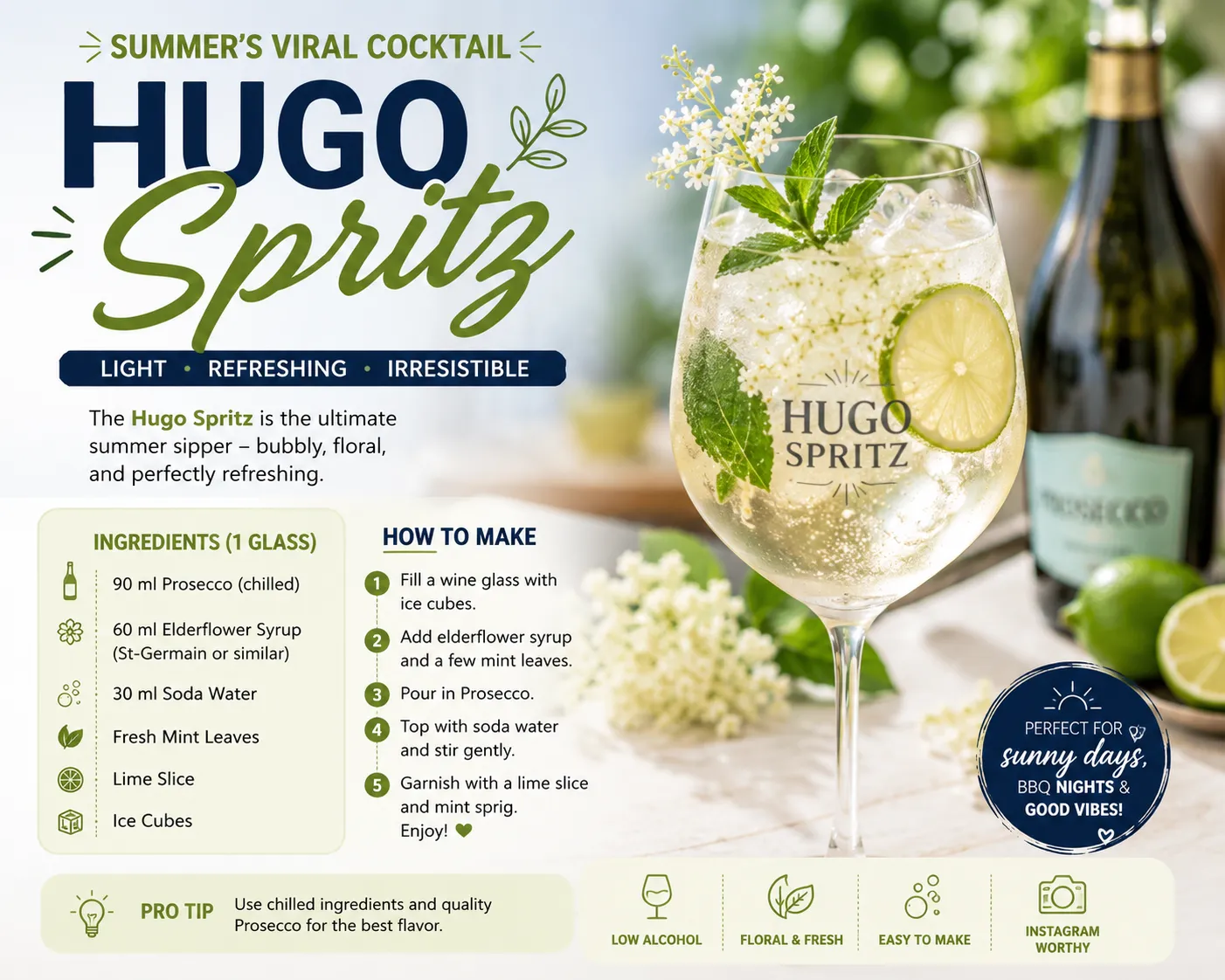
The Hugo Spritz has become America’s breakout cocktail of summer 2026.
Google reports that searches for “how to make a Hugo Spritz at home” surged by 2,200% in one month. Its popularity comes down to a simple combination: sparkling wine, floral elderflower, soda water, mint and lime.
It is lighter in color and less bitter than an Aperol Spritz. It also takes approximately five minutes to assemble—no cocktail shaker required.
Below is a balanced single-glass recipe, a party-size version and an alcohol-free alternative.

What Is a Hugo Spritz?
A Hugo Spritz is a sparkling elderflower cocktail associated with South Tyrol in northern Italy.
The modern version typically contains:
- Dry prosecco or another sparkling wine
- Elderflower liqueur or elderflower cordial
- Soda water
- Fresh mint
- Lime
- Plenty of ice
The drink was created in 2005 by bartender Roland Gruber as an alternative to the traditional bittersweet spritz. The earliest version reportedly used lemon-balm syrup. Elderflower later became the defining flavor because it was more widely available.
The Hugo tastes floral, citrusy, lightly sweet and sparkling. Unlike an Aperol Spritz, it has no strong orange bitterness.
Why the Hugo Spritz Is Trending in 2026
The drink fits several current preferences at once.
- It is easy to prepare at home.
- Its pale color and green garnish photograph well.
- Elderflower offers a distinctive flavor without intense bitterness.
- Soda water gives the drink a lighter finish.
- The recipe is easy to modify for different sweetness levels.
Google’s official U.S. summer search report found that “how to make a Hugo Spritz at home” increased by 2,200%. Spritz-related searches also rise seasonally as people look for cold drinks suitable for outdoor gatherings.
See the complete trend data in Google’s Summergeist 2026 report.
Classic Hugo Spritz Recipe
Preparation time: 5 minutes
Servings: 1
Equipment: Large wine glass and bar spoon
Ingredients
- 1½ ounces elderflower liqueur
- 2 ounces chilled dry prosecco
- 2 ounces chilled sparkling water or club soda
- 6 to 8 fresh mint leaves
- 1 lime wedge or thin lime wheel
- Ice cubes
- 1 mint sprig for garnish
Instructions
- Fill a large wine glass generously with fresh ice.
- Lightly press or clap the mint leaves between your hands to release their aroma.
- Add the mint to the glass without crushing it into small pieces.
- Pour the chilled prosecco and sparkling water over the ice.
- Add the elderflower liqueur.
- Stir gently two or three times to combine the ingredients without losing excessive carbonation.
- Garnish with a lime wedge and fresh mint sprig.
- Serve immediately.
This version follows the proportions published in the St-Germain Hugo Spritz recipe.
The Best Order for Building a Hugo Spritz
The order matters more than it appears.
| Step | Why it matters |
|---|---|
| Add plenty of ice | Rapidly chills the glass and reduces uncontrolled dilution |
| Add aromatic mint | Allows the fragrance to spread without pulverizing the leaves |
| Pour sparkling ingredients | Distributes bubbles through the drink |
| Add elderflower | The denser liqueur moves through the sparkling mixture |
| Stir gently | Combines the drink while preserving carbonation |
| Garnish last | Keeps the mint and lime fresh and visible |
Elderflower Liqueur vs. Elderflower Cordial
These ingredients sound interchangeable, but they produce different drinks.
| Ingredient | Contains alcohol? | Flavor | Best use |
|---|---|---|---|
| Elderflower liqueur | Yes | Floral, sweet and complex | Modern cocktail-style Hugo Spritz |
| Elderflower cordial | Usually no | Sweeter and more concentrated | Lighter Hugo or alcohol-free version |
| Elderflower syrup | Usually no | Sweet and concentrated | Traditional-style variation |
If using cordial or syrup instead of liqueur, start with a smaller amount. Add more only after tasting.
Cordial sweetness varies substantially between brands. A direct one-to-one substitution can make the cocktail overly sweet.
What Prosecco Is Best for a Hugo Spritz?
Use a cold, dry prosecco that you would be comfortable drinking on its own.
Look for labels such as:
- Brut
- Extra Brut
- Brut Nature
Despite its name, prosecco labeled “Extra Dry” is generally sweeter than Brut. It can still work, but you may want to reduce the elderflower liqueur or increase the soda water.
An expensive vintage sparkling wine is unnecessary. The mint, lime, elderflower and soda modify its flavor, so a crisp everyday bottle is usually the practical choice.
How to Prepare the Mint Properly
Mint gives the Hugo Spritz much of its fresh aroma. It can also become bitter or untidy when handled aggressively.
Do not grind the leaves into the glass.
Instead:
- Rinse the mint gently.
- Pat it completely dry.
- Place the leaves in one palm.
- Clap once with the other hand.
- Add the aromatic leaves to the glass.
This releases the surface oils without creating dark fragments that enter the straw or collect between the ice cubes.
How to Make a Less-Sweet Hugo Spritz
Sweetness is the most common complaint about a poorly balanced Hugo.
For a drier drink:
- Use Brut or Extra Brut prosecco.
- Reduce elderflower liqueur to ¾ or 1 ounce.
- Increase soda water by 1 ounce.
- Add a small squeeze of fresh lime.
- Avoid sweetened flavored sparkling water.
Taste before adding extra citrus. Too much lime can dominate the subtle elderflower aroma.
Hugo Spritz Pitcher Recipe for a Party
A pitcher is convenient, but the sparkling ingredients lose carbonation when prepared too far in advance.
Servings: Approximately 8
Ingredients
- 12 ounces elderflower liqueur
- 16 ounces chilled dry prosecco
- 16 ounces chilled sparkling water
- 1 loosely packed cup of fresh mint leaves
- 2 limes, thinly sliced
- Ice for serving
Instructions
- Chill every liquid ingredient and the empty pitcher.
- Prepare individual glasses with ice.
- Add elderflower liqueur, prosecco and sparkling water to the pitcher immediately before serving.
- Add mint and lime slices.
- Stir once, gently.
- Pour into the prepared glasses and serve immediately.
For better bubbles, keep the ice in individual glasses rather than filling the pitcher with it. This also prevents the final servings from becoming excessively diluted.
Make-Ahead Party Strategy
Do not fully mix the cocktail hours before guests arrive. Prepare its components instead.
| Task | When to do it |
|---|---|
| Chill prosecco, soda and liqueur | Several hours ahead |
| Wash and dry mint | Up to several hours ahead |
| Slice lime | Shortly before serving |
| Fill an ice bucket | Immediately before guests arrive |
| Combine sparkling ingredients | At serving time |
Nonalcoholic Hugo Spritz Recipe
This version keeps the floral, mint and citrus character without prosecco or elderflower liqueur.
Ingredients
- 3 ounces nonalcoholic sparkling wine
- 2 ounces sparkling water
- ½ to 1 ounce nonalcoholic elderflower cordial
- 6 fresh mint leaves
- 1 lime wedge
- Ice
Instructions
- Fill a large wine glass with ice.
- Gently release the mint’s aroma and add it to the glass.
- Pour in the nonalcoholic sparkling wine and sparkling water.
- Add ½ ounce of elderflower cordial.
- Stir gently and taste.
- Add more cordial only if needed.
- Garnish with lime and mint.
Check product labels carefully if complete alcohol avoidance is necessary. Some drinks marketed as “nonalcoholic” can contain a small residual amount.
Five Easy Hugo Spritz Variations
1. Cucumber Hugo
Add two thin cucumber ribbons. Cucumber reinforces the drink’s fresh character without increasing sweetness.
2. Rosé Hugo
Replace regular prosecco with a dry sparkling rosé. The result is fruitier and pale pink.
3. Berry Hugo
Add two raspberries or sliced strawberries. Avoid crushing too much fruit, which can make the drink cloudy and difficult to sip.
4. Citrus Hugo
Replace lime with a thin lemon or grapefruit wheel. Grapefruit creates a slightly more bitter finish.
5. Lower-Alcohol Hugo
Use less prosecco and elderflower liqueur while increasing sparkling water. Maintain the mint and lime garnish so the drink remains aromatic.
Hugo Spritz vs. Aperol Spritz
| Feature | Hugo Spritz | Aperol Spritz |
|---|---|---|
| Main flavor | Elderflower | Bitter orange and herbs |
| Typical color | Pale gold or nearly clear | Bright orange |
| Garnish | Mint and lime | Orange slice |
| Taste | Floral, fresh and lightly sweet | Bittersweet and citrus-forward |
| Base combination | Prosecco, elderflower and soda | Prosecco, Aperol and soda |
The better choice depends on taste. People who enjoy bitter aperitifs may prefer Aperol, while those who like floral cocktails may favor the Hugo.
Common Hugo Spritz Mistakes
Using too little ice
A few small cubes melt rapidly. Filling the glass with solid ice keeps the drink cold and controls dilution more effectively.
Using warm ingredients
Warm prosecco melts ice quickly and loses carbonation. Chill all liquids before opening them.
Over-muddling the mint
Aggressive muddling can make mint bitter and fill the drink with small pieces.
Choosing a very sweet sparkling wine
Elderflower already contributes sweetness. A sweet wine can make the final drink taste syrupy.
Stirring too much
Repeated stirring releases carbonation. Two or three gentle turns are sufficient.
Preparing it too early
A Hugo Spritz should be served immediately. A pre-mixed pitcher will gradually become flat.
What Food Goes With a Hugo Spritz?
The drink’s floral sweetness works best with salty, fresh or lightly acidic foods.
- Olives and roasted nuts
- Soft and semi-firm cheeses
- Prosciutto or other cured meats
- Tomato bruschetta
- Grilled vegetables
- Smoked salmon crostini
- Light flatbreads
- Cucumber and feta salad
- Fresh fruit
Very sweet desserts can make the elderflower liqueur seem heavier. If serving dessert, choose citrus, berries or a lightly sweetened pastry.
Watch: How to Make a Hugo Spritz
The Bottom Line
The Hugo Spritz has earned its popularity because it is simple, adaptable and visually distinctive.
For the best version, use cold dry prosecco, fresh mint, plenty of ice and enough soda water to keep the elderflower from becoming overpowering.
Build the drink immediately before serving. Stir gently and adjust the sweetness to your taste rather than treating one ratio as an absolute rule.
For parties, chill everything in advance but wait until serving time to open the prosecco and mix the pitcher.
Explore more recipes and summer ideas through Zobuz’s summer-drink coverage, or browse the latest stories on Zobuz.
Responsible drinking notice: This recipe is intended for adults of legal drinking age. Alcohol impairs judgment and coordination. Do not drink and drive, and avoid alcohol during pregnancy or when it conflicts with medication or medical advice.
Frequently Asked Questions
What is in a Hugo Spritz?
A modern Hugo Spritz typically contains prosecco, elderflower liqueur, sparkling water, fresh mint, lime and ice.
What does a Hugo Spritz taste like?
It tastes floral, sparkling, citrusy and lightly sweet. It is less bitter than an Aperol Spritz.
Can I make a Hugo Spritz without St-Germain?
Yes. You can use another elderflower liqueur or a smaller amount of elderflower cordial. Cordial is usually sweeter, so begin with less and adjust after tasting.
What prosecco is best for a Hugo Spritz?
A chilled dry prosecco labeled Brut or Extra Brut provides a crisp counterpoint to sweet elderflower.
Can I make a Hugo Spritz in advance?
Prepare the garnishes and chill the ingredients in advance, but combine the sparkling ingredients immediately before serving to preserve carbonation.
Can a Hugo Spritz be made without alcohol?
Yes. Replace prosecco with nonalcoholic sparkling wine and use nonalcoholic elderflower cordial instead of elderflower liqueur.