
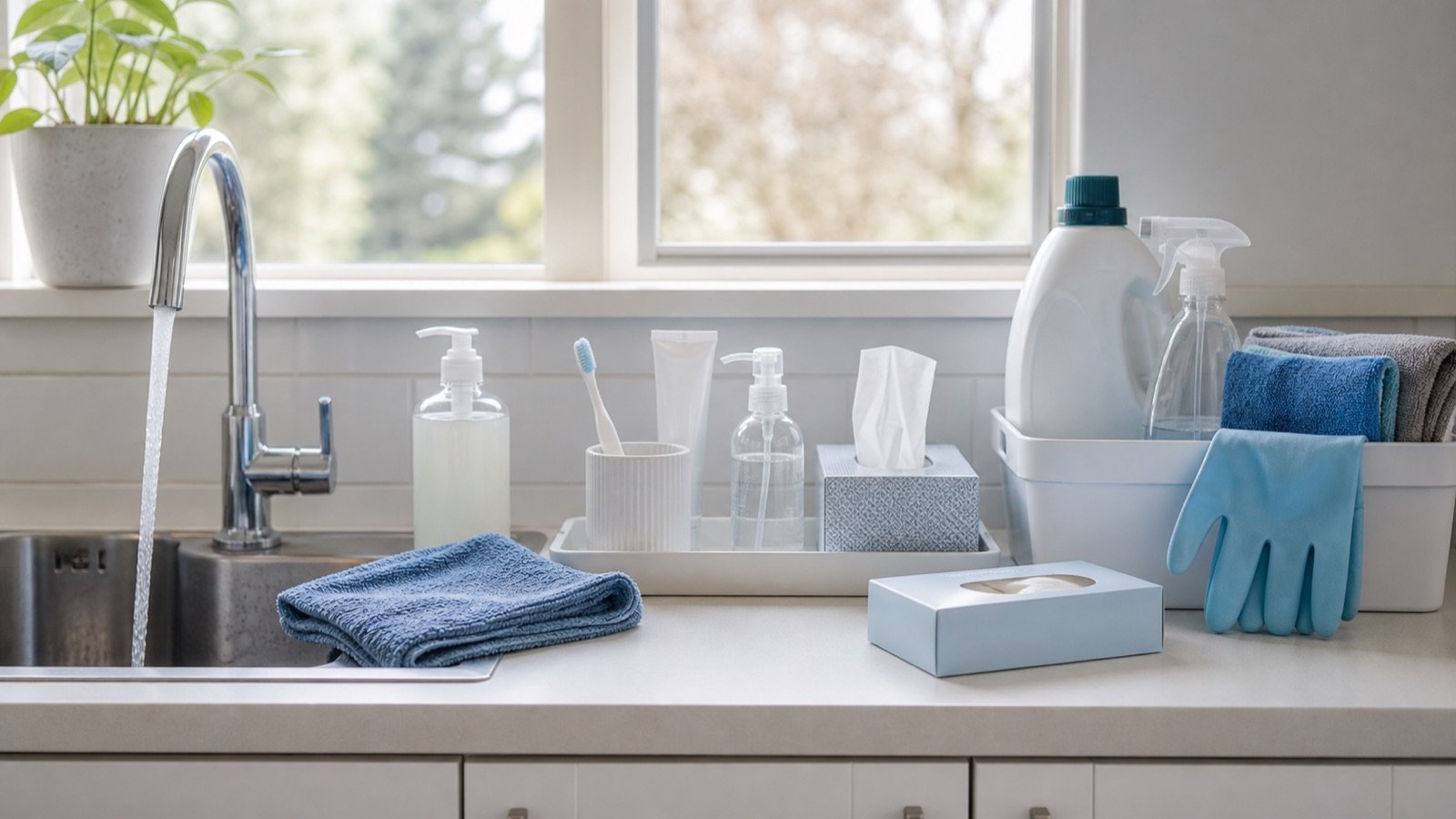
Good hygiene is a set of targeted habits, not a collection of “antibacterial” products. For most households, the essentials are plain soap, safe water, a way to dry hands, suitable cleaning products, basic oral-care items and task-specific protective equipment when there is a real exposure risk.
Wash hands with plain soap and water at key times. Use an alcohol-based hand rub when hands are not visibly dirty and washing is unavailable. Clean ordinary household surfaces routinely, reserve disinfection for situations that call for it, and never treat disposable gloves as a replacement for hand hygiene.
This general guide is not a substitute for advice from a clinician, dentist, pharmacist, workplace safety professional or local public-health authority. Healthcare, food-service and hazardous-work settings require their own procedures.
The everyday hygiene toolkit
| Essential | Primary purpose | Important limitation |
|---|---|---|
| Plain soap and running water | Remove dirt and germs from hands | Needs thorough coverage and drying |
| Alcohol-based hand rub | Clean hands when washing is unavailable | Not for visibly dirty or greasy hands; check alcohol content and label |
| Household detergent or cleaner | Remove dirt and most germs from surfaces | Cleaning is not the same as disinfection |
| Appropriate disinfectant | Kill remaining germs when disinfection is indicated | Requires correct surface, contact time, ventilation and safe storage |
| Reusable cleaning gloves | Protect skin during suitable cleaning tasks | Must be cleaned, dried and kept task-specific |
| Disposable gloves | Barrier for defined contamination or chemical risks | Can spread contamination and do not replace handwashing |
| Toothbrush, fluoride toothpaste and interdental cleaner | Support oral hygiene | Technique and regular dental care still matter |
| Tissues and lined waste bin | Support respiratory hygiene and waste containment | Hands still need cleaning after use |
Hand hygiene comes first
The World Health Organization’s 2025 community guideline recommends plain soap and water long enough to cover and rub both hands completely. Key times include before preparing food; before eating or feeding another person; after using the toilet or handling faeces; after coughing, sneezing or blowing the nose; and whenever hands are visibly dirty.
A practical handwashing routine is to wet the hands, apply soap, rub all surfaces—including palms, backs, between fingers, thumbs, fingertips and around nails—rinse, and dry thoroughly. The Australian Government advises washing with soap and water for 20 seconds in its public-health materials.
When soap and water are unavailable and hands are not visibly dirty, an alcohol-based hand rub containing at least 60% alcohol is an effective alternative under current WHO community hand-hygiene guidance. Apply enough to cover every surface and rub until dry. Keep sanitiser away from flames and supervise young children to prevent swallowing or eye exposure.
Hand wipes are not all interchangeable
A wipe sold for skin, a cosmetic baby wipe and a surface-disinfecting wipe are different products. Read the intended use. Never use a surface disinfectant on skin unless the label specifically permits it, and do not assume a skin wipe has been tested to disinfect a table or device.
When handwashing is available, soap and water are the dependable first choice. If a hand wipe is the only practical option, use one designed for hands and follow its label, then wash normally when facilities become available. Marketing words such as “antibacterial” do not establish effectiveness against every organism.
Use gloves for the task—not for reassurance
Gloves can be appropriate when handling blood or body fluids, cleaning vomit or faeces, caring for some wounds, or using chemicals whose label requires protection. Healthcare workers and carers must follow the relevant infection-control procedure and select the correct glove material and other protective equipment.
- Clean and dry hands before putting gloves on when the procedure requires it.
- Check for tears and select the correct size and material.
- Do not touch phones, door handles or clean supplies with contaminated gloves.
- Change gloves between tasks and people; never wash disposable gloves for reuse.
- Remove them without touching the contaminated outside with bare skin.
- Dispose of them according to the task and local rules.
- Clean hands immediately after removal.
WHO states clearly that gloves do not replace hand hygiene. Wearing the same pair across multiple surfaces can move contamination more widely than clean bare hands. Latex can also cause allergy in some people; glove selection should reflect the exposure and user.
Clean first; disinfect when needed
Cleaning uses water, soap or detergent and friction to remove dirt and germs. Disinfecting uses a chemical product to kill many remaining germs. The U.S. Centers for Disease Control and Prevention notes that, in most homes, routine cleaning is sufficient and extra disinfection is usually most relevant when someone is sick or at higher risk.
- Clean high-touch surfaces and anything visibly dirty.
- Use the product intended for that surface and purpose.
- Clean before disinfecting unless the label describes a combined product.
- Observe the stated contact time; wiping it dry immediately may defeat the process.
- Provide ventilation and wear protective equipment required by the label.
- Never mix bleach with ammonia, acids or other cleaners.
- Store chemicals in their original labelled containers away from children and pets.
The CDC’s current guide to cleaning and disinfecting explains the distinction and when each approach is useful. For poisoning or chemical exposure in Australia, contact the Poisons Information Centre on 13 11 26; call emergency services for a life-threatening situation.
Respiratory hygiene needs simple supplies
Cover coughs and sneezes with a tissue or the inside of the elbow rather than the hands. Put used tissues in a bin and clean the hands. Stay away from others when unwell where possible, improve ventilation, and follow current public-health advice for testing, masks or isolation when a particular infection or outbreak warrants it.
A mask is not a substitute for hand hygiene, ventilation or staying home when sick. Its type and use should match the risk, setting and current health guidance; occupational respirators require a proper safety programme.
Food hygiene prevents cross-contamination
Wash and dry hands before preparing food and after handling raw meat, eggs, rubbish, pets or the toilet. Keep raw and ready-to-eat foods separate, use clean utensils and surfaces, and follow safe temperature and storage guidance.
Disposable gloves do not make food handling automatically safe. They must be changed when moving between raw and ready-to-eat food or after contamination, with handwashing between changes. Food Standards Australia New Zealand provides current food-safety basics for households.
Oral hygiene is part of everyday health
Healthdirect Australia recommends brushing teeth and gums twice a day for two minutes with fluoride toothpaste and cleaning between the teeth daily. A soft-bristled brush and gentle technique help clean the gumline without aggressive scrubbing. Replace the brush or head when worn and do not share it.
See a dental practitioner at the interval appropriate for you and sooner for persistent pain, swelling, bleeding, sores or a dental injury. Zobuz’s article on common oral-health myths offers additional context, while Healthdirect’s teeth-cleaning guide provides the clinical baseline.
Personal-care hygiene without overcleaning
Regular bathing, clean clothing, nail care and safe menstrual-product use support comfort and skin health. More cleaning is not always better: harsh fragrance, repeated disinfectants and aggressive scrubbing can irritate skin and damage its barrier.
- Use mild products suited to the body area and stop if irritation develops.
- Do not share razors, toothbrushes or other items that may contact blood or body fluids.
- Clean reusable personal-care tools according to their instructions.
- Keep cuts clean and covered when appropriate.
- Seek medical advice for spreading redness, significant swelling, pus, fever or a wound that is not healing.
Build a small, safe hygiene kit
A home kit might include plain soap, alcohol-based hand rub, tissues, household detergent, an appropriate disinfectant for occasional use, reusable cleaning gloves, paper or washable cleaning cloths, bin liners, a thermometer and basic wound supplies. Add disposable gloves only for identified tasks.
Check expiry dates and packaging, keep products dry and secure, and avoid stockpiling quantities that will expire. Businesses, schools and care settings should conduct a risk assessment, maintain safety data and train users rather than placing wipes and gloves everywhere without instructions.
Frequently asked questions
Are antibacterial wipes better than soap?
Not as a general rule. Plain soap and water are the standard for visibly dirty hands and routine handwashing. Products labelled for skin may be useful in limited situations, but surface wipes should not be used on hands.
Should disposable gloves be worn on public transport?
Routine glove use in ordinary public settings is generally unnecessary and can spread contamination if the wearer touches multiple surfaces. Avoid touching the face and clean the hands at appropriate times.
Does every household surface need disinfecting daily?
No. Routine cleaning removes dirt and most germs in ordinary circumstances. Disinfection is more relevant for specified high-risk tasks, when someone is ill or when public-health guidance calls for it.
The practical conclusion
Effective hygiene is specific and proportionate. Prioritise soap, water, sound technique and clean environments. Use sanitiser, disinfectants and gloves for the situations they are designed to address, follow labels and professional guidance, and avoid letting convenience products replace the basics.