
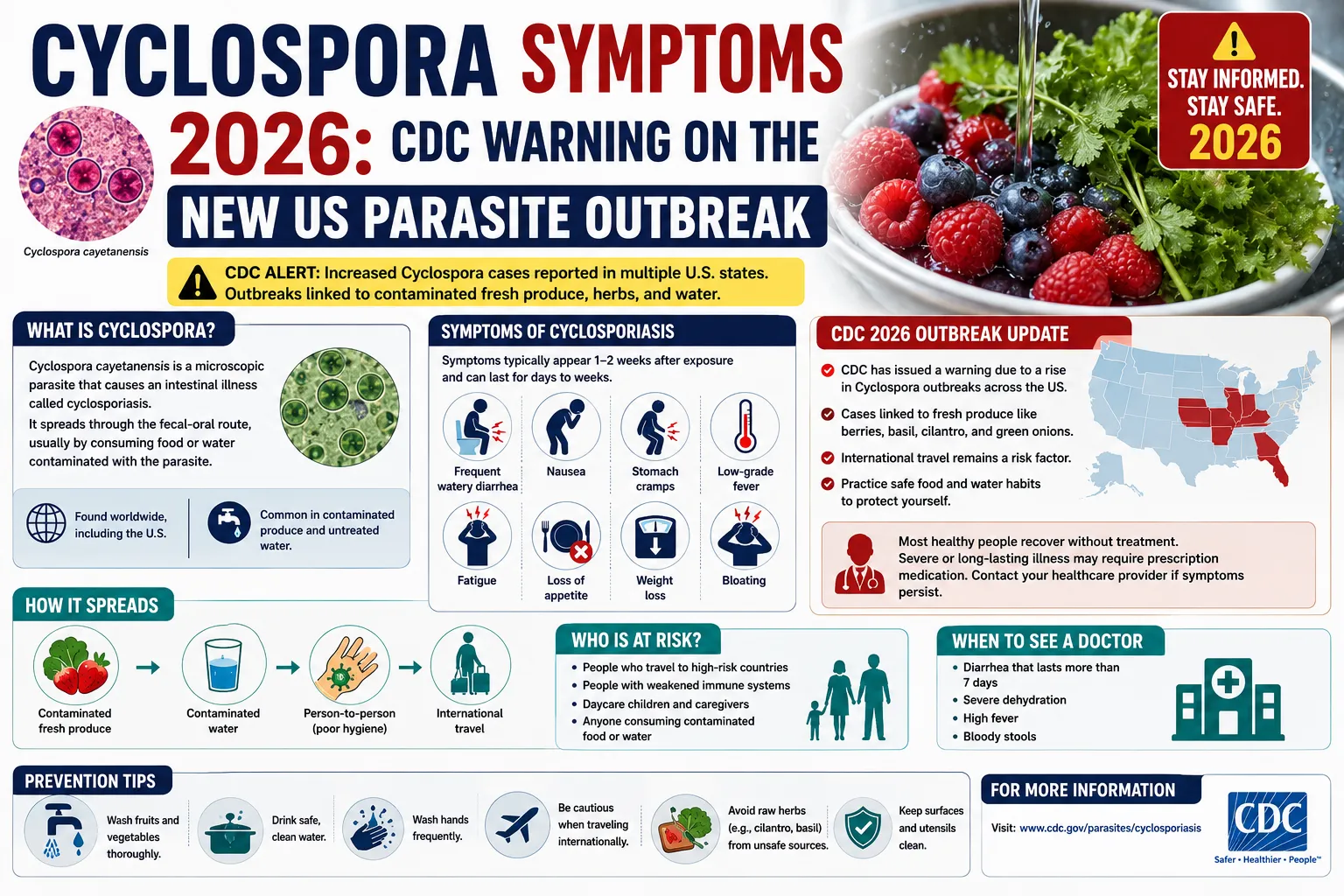
Health officials across the United States have issued an urgent warning following a significant spike in Cyclospora cases. The 2026 outbreak, which has already been detected in at least 31 states, is primarily linked to contaminated fresh produce, causing what many medical professionals describe as a severe and persistent gastrointestinal illness. Unlike typical food poisoning that resolves in a few days, Cyclospora symptoms 2026 can last for weeks or even months if left untreated, making early detection and correct diagnosis critical for American families.
Cyclospora cayetanensis is a microscopic parasite that enters the body through the ingestion of contaminated food or water. It is not spread directly from person to person; instead, the parasite requires time outside the host—often in soil or water—to become infectious. This characteristic makes it a unique challenge for the US food supply chain, particularly for produce that is consumed raw, such as lettuce, berries, and fresh herbs.
For more context on how this compares to previous years, you may want to review the Cyclospora outbreak 2024 symptoms to see how the current 2026 strain and distribution patterns have evolved.
Recognizing Primary Cyclospora Symptoms 2026
The hallmark of a Cyclospora infection is “explosive” watery diarrhea. However, the illness is multifaceted and can mimic other conditions like the stomach flu or more common bacterial infections. Because the incubation period is roughly one week after ingestion, many patients fail to connect their illness to the specific fruit or vegetable that caused it.
According to the Centers for Disease Control and Prevention (CDC), the following symptoms are most prevalent in the current 2026 surge:
- Watery Diarrhea: This is the most common symptom and can be frequent and intense.
- Loss of Appetite: Patients often report a sudden and complete lack of hunger.
- Weight Loss: Due to the duration of the illness, significant weight loss is common.
- Stomach Cramps: Severe bloating and painful abdominal pressure.
- Increased Gas: Excessive flatulence and a feeling of abdominal distention.
- Nausea and Fatigue: A lingering sense of exhaustion that does not improve with rest.
- Low-Grade Fever: While not universal, some patients experience mild temperature spikes.
If left untreated, symptoms may seem to go away and then return. This “relapsing” pattern is a key indicator that you are dealing with a parasite like Cyclospora rather than a standard viral infection.
Current Outbreak Status: Is Your State Affected?
The 2026 outbreak has shown a particularly high concentration in the Midwest and Northeast, though cases have been reported from coast to coast. Michigan health officials have been at the forefront of the investigation, identifying potential links to pre-packaged salad greens and iceberg lettuce distributed through major grocery chains.
The FDA is currently monitoring several clusters of illness. Unlike the Bird Flu symptoms in humans 2026, which primarily concern those in contact with livestock, Cyclospora is a threat to the general consumer who shops at standard supermarkets and dines at restaurants.
States with the highest reported case counts in 2026 include:
- Michigan: Over 3,000 suspected cases linked to leafy greens.
- Ohio and Illinois: Significant clusters reported in suburban communities.
- New York and New Jersey: Rising cases linked to imported herbs like cilantro.
- Florida: Year-round cases due to the warm climate and high produce consumption.
- California: Isolated outbreaks linked to specific berry shipments.
Identifying the Source: Recalls and Risky Foods
The primary difficulty with Cyclospora is that it is often found on produce that is difficult to wash effectively. The parasite is “sticky” and can adhere to the crevices of a leaf or the skin of a berry. In 2026, several specific food categories have been flagged as high-risk.
Leafy Greens and Salad Kits
Iceberg and romaine lettuce are the most frequent culprits in the current cycle. Bagged salad kits, which often combine multiple types of greens from different farms, can make tracing the exact source of the parasite difficult for health investigators. If a recall is announced for a specific brand in your area, it is vital to discard the product immediately and sanitize the refrigerator drawer where it was stored.
Fresh Herbs
Cilantro, basil, and parsley have historically been linked to Cyclospora outbreaks. These are often grown in conditions where contaminated irrigation water might be used. Since these herbs are usually eaten raw as a garnish, the parasite remains active when consumed.
Berries
Raspberries and blackberries are the berries most commonly associated with cyclosporiasis. Their porous surface provides an ideal hiding spot for the microscopic oocysts (eggs) of the parasite.
Comparing Stomach Ailments: Cyclospora vs. Others
Understanding what makes Cyclospora different from other common US stomach bugs can help you decide when to seek medical attention. Use the table below to differentiate between common gastrointestinal issues.
| Feature | Cyclospora (Parasite) | Norovirus (Virus) | Salmonella (Bacteria) |
|---|---|---|---|
| Onset Time | ~7 days after eating | 12–48 hours after exposure | 6 hours to 6 days |
| Duration | Weeks to months | 1–3 days | 4–7 days |
| Key Symptom | Relapsing, watery diarrhea | Projective vomiting | Bloody stool/Fever |
| Treatment | Specific Antibiotics | Rest and Hydration | Often resolves itself |
| Infectious? | No (Food/Water only) | Highly (Person-to-person) | Yes (Contaminated food) |
Diagnosis and Treatment Options
One of the biggest hurdles in the 2026 outbreak is that a standard “stool culture” performed by most doctors does not usually look for Cyclospora. If you suspect you have been exposed, you must specifically ask for a stool parasite exam or a gastrointestinal PCR panel that includes Cyclospora cayetanensis.
According to NBC News reports, healthcare providers are seeing a high rate of misdiagnosis where patients are told they simply have a “viral bug,” only to return two weeks later with worsening fatigue and weight loss.
The standard treatment for Cyclospora is a combination of two antibiotics: trimethoprim-sulfamethoxazole (commonly known as Bactrim, Septra, or Cotrim). For patients with a sulfa allergy, alternative treatments are available, though they may be less effective and require a longer course of medication. It is essential to finish the entire prescription, even if you feel better after the first few doses, to ensure the parasite is completely eradicated from your system.
Prevention Checklist: Protecting Your Kitchen
While you cannot control the safety of the global food supply, there are several steps you can take at home to significantly reduce your risk of contracting the 2026 strain of Cyclospora.
- Wash Produce Aggressively: While washing doesn’t guarantee removal, scrubbing firm produce and rinsing leafy greens under high-pressure running water can help.
- Check for Recalls Daily: During an active outbreak, check the FDA’s recall list before consuming raw vegetables.
- Cook Your Veggies: Heat kills the Cyclospora parasite. If an outbreak is active in your state, consider sautéing or steaming your greens instead of eating them raw.
- Sanitize Prep Areas: Use a dilute bleach solution or a high-alcohol sanitizer on cutting boards that have touched raw produce.
- Be Cautious While Traveling: Cyclospora is often found in areas with less stringent water treatment protocols. If traveling abroad or to highly affected regions, stick to peeled fruits and cooked vegetables.
The 2026 Cyclospora surge serves as a reminder of the vulnerability of our fresh food systems. By staying informed about the latest symptoms and recall notices, consumers can navigate this outbreak safely and ensure they receive the correct medical treatment if they fall ill.
Watch: A Helpful Video Guide
https://www.youtube.com/watch?v=2n-Y6XvHw8A
Frequently Asked Questions
Can you get Cyclospora from another person?
No, Cyclospora is not spread directly from person to person. It is acquired only by ingesting food or water contaminated with the parasite.
How long do Cyclospora symptoms last?
Without treatment, symptoms can last from a few days to a month or longer, often appearing to go away and then returning (relapsing).
What is the best way to wash Cyclospora off lettuce?
The parasite is very sticky and difficult to wash off. Rinsing under high-pressure water or using a vegetable brush on firm produce helps, but cooking is the only way to guarantee the parasite is killed.
Does hand sanitizer kill Cyclospora?
Standard hand sanitizers are not effective against Cyclospora oocysts. Thorough handwashing with soap and water is recommended after handling raw produce.
Which antibiotic treats Cyclospora?
The most common treatment is trimethoprim-sulfamethoxazole, often sold under the brand names Bactrim or Septra.