OpenAI is reportedly preparing to enter the consumer hardware market with a mobile, screen-free AI speaker designed to function as a new kind of home computer.
Bloomberg reported that the unreleased device is being developed as an artificial-intelligence companion rather than a conventional smart speaker. OpenAI has not officially announced the product, published its specifications or confirmed a release date, so the available details should be treated as preliminary.
If the report proves accurate, the product would mark a significant expansion beyond ChatGPT, enterprise software and APIs. It would place OpenAI in direct competition with established consumer-device companies while testing whether generative AI can support a compelling hardware category of its own.
What Has Been Reported About the OpenAI AI Speaker?
The reported product is a compact, portable speaker without a traditional screen. It is expected to use voice interaction, cameras and other sensors to understand its surroundings and communicate with users.
Reports suggest it could answer questions, handle messages, control compatible smart-home equipment, play media and provide personalized assistance. Its mobility may distinguish it from speakers designed to remain in one location, although the exact movement mechanism and physical design have not been confirmed.
The absence of a screen appears central to the concept. Instead of asking users to navigate menus and applications, the device would rely on conversation, environmental awareness and proactive assistance.
Jony Ive’s Role in OpenAI’s Hardware Strategy
The project is closely associated with former Apple design chief Jony Ive and his design organization. OpenAI acquired Ive’s hardware startup in a transaction reportedly valued at approximately $6.5 billion, bringing its product-development capabilities closer to OpenAI.
Ive’s involvement has intensified attention around the device because of his role in creating several influential Apple products. However, association with a prominent designer does not guarantee commercial success.
AI hardware has proven difficult to execute. Devices must provide a clear advantage over smartphones while addressing battery life, reliability, privacy, pricing and everyday usefulness. Products that require users to change familiar habits face an especially demanding adoption challenge.
Why Would OpenAI Build a Screen-Free Device?
Most people currently access generative AI through phones, computers and web browsers controlled by other companies. Dedicated hardware could give OpenAI more influence over the complete user experience.
A device designed around AI from the beginning could potentially respond more naturally than a traditional smart speaker whose assistant was added to an existing software platform. It could also connect voice, vision, memory and smart-home controls through a unified conversational interface.
The idea nevertheless depends on execution. Smartphones already offer microphones, cameras, speakers, applications and constant connectivity. An OpenAI AI speaker would need to demonstrate why consumers should carry or place another device in their homes.
OpenAI’s recently launched model family may provide part of the technical foundation. Zobuz’s overview of OpenAI GPT-5.6 explains how the company is dividing its latest models across different performance and efficiency tiers.
Privacy Will Be a Central Question
A device that uses microphones, cameras or environmental sensors will inevitably raise privacy concerns. Consumers will want clear answers about when sensors are active, where recordings are processed, how long information is retained and whether personal data contributes to model training.
Physical controls, visible recording indicators, local processing and understandable privacy settings could become essential product requirements. A proactive AI companion also introduces a difficult question: when is assistance useful, and when does it become intrusive?
Release Timing and Legal Uncertainty
Bloomberg’s report indicates that OpenAI could unveil the device before an expected commercial release in 2027. Product plans can change substantially during hardware development, and no official launch schedule has been published.
The project is also unfolding amid a legal dispute involving Apple and OpenAI’s hardware operation. Any litigation affecting personnel, intellectual property or product development could complicate the timeline. Axios also highlighted the report while noting that the planned schedule could be delayed.
Could It Compete With Existing Smart Speakers?
Amazon, Apple and Google already offer speakers connected to extensive smart-home ecosystems. OpenAI’s potential advantage would be its conversational AI and ability to combine reasoning with broader assistant functions.
Its disadvantage is the maturity of competing platforms. Existing products already support home automation, music services, communications and established developer integrations. Success may therefore depend on whether the device creates a new category rather than simply delivering a more capable version of an existing speaker.
Readers following the wider market can explore Zobuz’s guide to the top AI tools of 2026 and its explanation of how Google AI Search is changing information discovery.
The Bottom Line
The reported OpenAI AI speaker represents an ambitious attempt to move generative AI beyond phones and computers. A screen-free, context-aware assistant could provide a more natural computing experience, but it would also face serious challenges involving privacy, reliability, usefulness and competition.
For now, the device remains unannounced. Its final design, price, technical specifications and release date will require official confirmation from OpenAI.
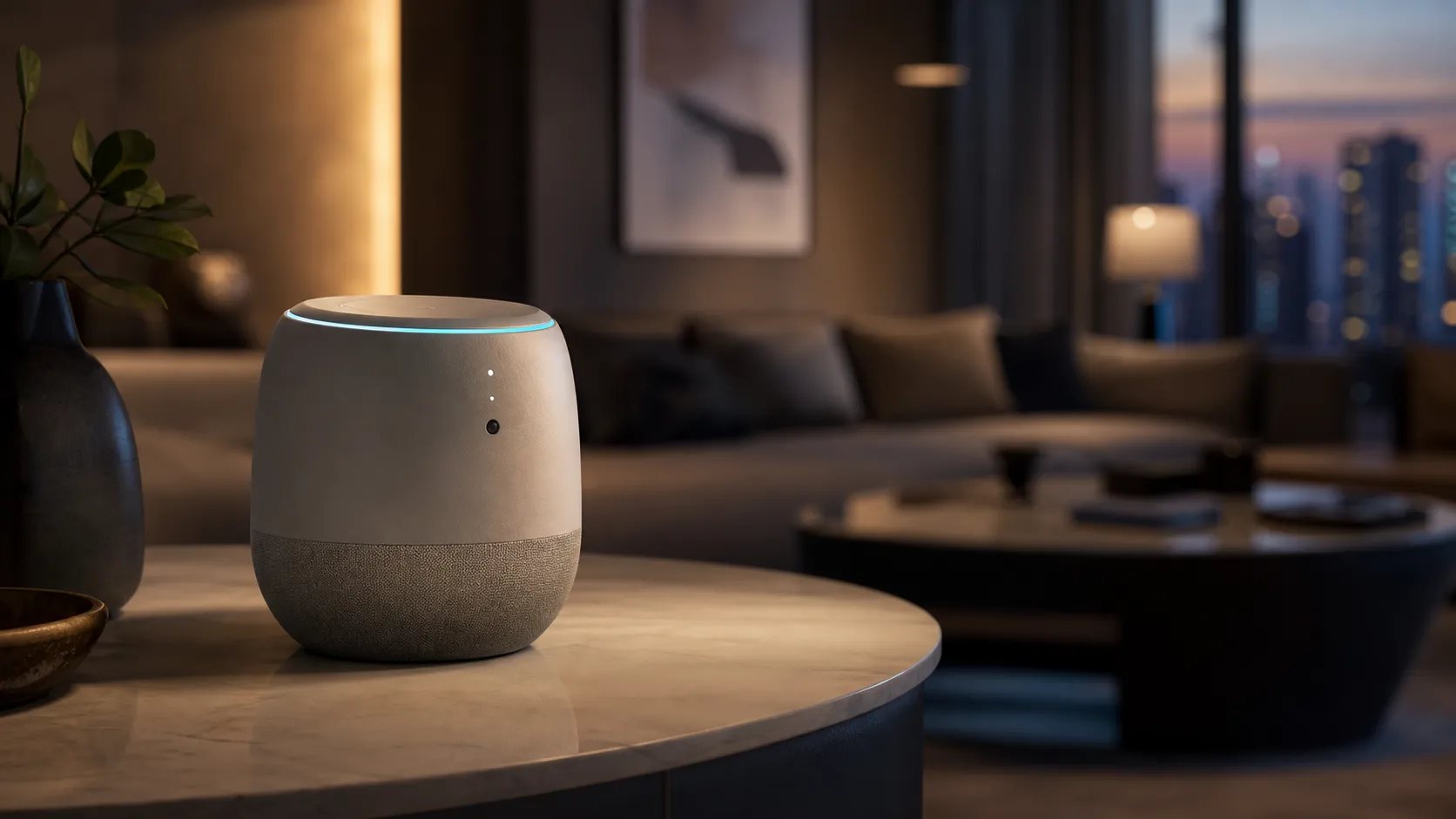
Featured image is an original conceptual illustration and does not depict the reported OpenAI device.