In early 2026, the landscape of infectious diseases in the United States has shifted as public health officials monitor the spread of the Oropouche virus, colloquially known as “Sloth Fever.” While previous years focused heavily on respiratory threats, the emergence of this vector-borne illness has introduced new concerns for travelers and residents in the southern U.S. states. Originally endemic to the Amazon basin, the Oropouche virus has expanded its geographical footprint, leading to increased surveillance by the Centers for Disease Control and Prevention (CDC).
Understanding Oropouche virus symptoms is the first line of defense for consumers. Because the illness shares many characteristics with more common tropical diseases like Dengue, Zika, and Chikungunya, misdiagnosis is a frequent challenge. This guide provides an authoritative look at the current state of Oropouche in the U.S., how to recognize the clinical signs, and the steps necessary to mitigate risk in a warming climate.
What is Oropouche Virus (Sloth Fever)?
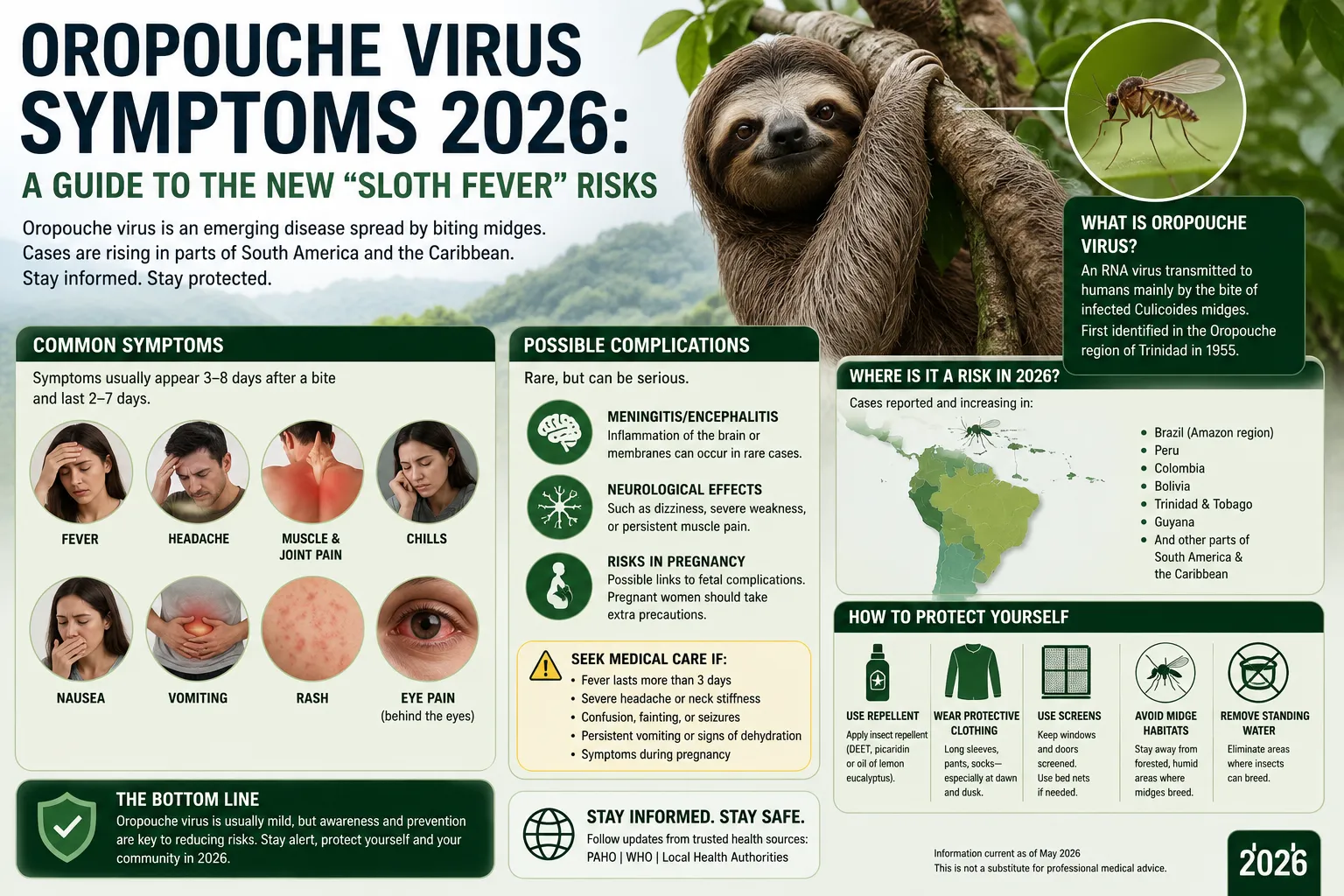
The Oropouche virus (OROV) is an orthobunyavirus that was first identified in 1955 in the Oropouche River region of Trinidad and Tobago. It earned the nickname “Sloth Fever” because pale-throated sloths are among the primary mammalian hosts in the forest cycle of the virus. In these tropical environments, the virus circulates between sloths, non-human primates, and birds via mosquitoes and midges.
In the urban cycle, however, the virus is primarily transmitted to humans through the bite of a tiny insect called Culicoides paraensis, commonly known as a biting midge or “no-see-um.” Unlike many other emerging viruses, Oropouche has shown a remarkable ability to cause large-scale outbreaks in densely populated areas when environmental conditions are favorable.
Primary Oropouche Virus Symptoms to Watch For
The incubation period for Oropouche fever typically ranges from three to eight days after being bitten by an infected midge. The onset of the illness is usually sudden and aggressive. If you have recently traveled to South America, the Caribbean, or areas of the Southern U.S. where midges are active, you should monitor for the following symptoms:
- High-Onset Fever: A sudden spike in temperature is the most common presenting sign.
- Severe Headache: Often described as a “behind-the-eyes” pain, similar to classic migraine symptoms.
- Muscle and Joint Pain: Intense aches in the back, legs, and arms that can be debilitating.
- Sensitivity to Light: Photophobia is a frequent neurological complaint during the acute phase.
- Nausea and Vomiting: Gastrointestinal distress often accompanies the fever.
- Dizziness and Chills: General malaise that persists for several days.
- Rash: A maculopapular rash may appear in some patients, though it is less common than in Zika cases.
One of the most frustrating aspects of Oropouche fever is its tendency to recur. According to CDC health reports, approximately one in five patients will experience a return of symptoms several days or even weeks after the initial illness appears to have resolved. This “double hit” can lead to extended periods of fatigue and missed work.
Rare but Serious Complications
While the majority of Oropouche cases are self-limiting and resolve within a week, a small percentage of patients develop more severe manifestations. The virus is neurotropic, meaning it can invade the central nervous system. In these rare instances, patients may develop meningitis or encephalitis.
Signs of neurological involvement include a stiff neck, persistent confusion, lethargy, and extreme sensitivity to stimuli. In 2026, healthcare providers are being urged to include Oropouche in their differential diagnoses for any patient presenting with aseptic meningitis following travel to affected regions.
Oropouche vs. Dengue vs. Zika: Key Differences
Because these viruses often co-circulate in the same regions, it is helpful to compare their clinical presentations:
| Feature | Oropouche Virus | Dengue Fever | Zika Virus |
|---|---|---|---|
| Primary Vector | Biting Midges (Culicoides) | Aedes Mosquitoes | Aedes Mosquitoes |
| Symptom Rebound | Common (20% of cases) | Rare | Rare |
| Pain Level | Severe Headache/Muscle | Extreme “Break-bone” Pain | Moderate |
| Eye Symptoms | Photophobia | Retro-orbital Pain | Conjunctivitis (Red eyes) |
| Hemorrhage Risk | Very Low | Moderate to High | Low |
Why is the US Seeing More Cases in 2026?
The increase in Oropouche cases within the United States is primarily linked to travel. Florida, in particular, has seen a rise in travel-associated cases as residents return from visiting relatives or vacationing in Cuba and Brazil. However, researchers are investigating the potential for local transmission. The Culicoides paraensis midge is present in several southern states, and as global temperatures rise, the range of these midges may expand further north.
For more information on how environmental factors are impacting health, see our guide on extreme heat safety, which discusses the broader implications of shifting climates on vector activity. Furthermore, those concerned about environmental health may also find our coverage of wildfire smoke protection useful, as respiratory and vector threats often coincide during the peak summer months.
Prevention: Protecting Yourself from Biting Midges
Because there is currently no vaccine for the Oropouche virus, prevention relies entirely on avoiding insect bites. This is more difficult than avoiding mosquitoes, as midges are much smaller and can often pass through standard window screens.
Physical Barriers and Repellents
- Use EPA-Registered Repellents: Products containing DEET, Picaridin, or IR3535 are effective against both midges and mosquitoes.
- Fine-Mesh Netting: If you are in a high-risk area, ensure screens are extremely fine-mesh (often labeled as “no-see-um” proof).
- Cover Up: Wear long sleeves and pants, preferably pre-treated with permethrin.
- Limit Outdoor Activity: Midges are most active during the early morning and late evening (dawn and dusk).
Travel Considerations
Before traveling to South or Central America, check the PAHO epidemiological alerts for the latest outbreak maps. Pregnant women are advised to exercise extra caution, as some early research in 2026 is investigating potential links between Oropouche and adverse pregnancy outcomes, similar to the risks associated with Zika.
Diagnosis and Treatment Options
Diagnosing Oropouche is complex because it requires specialized laboratory testing. Standard blood panels will not detect the virus. Doctors must order a polymerase chain reaction (PCR) test during the first few days of symptoms or an antibody test (serology) later in the course of the illness.
There is no specific antiviral treatment for Oropouche fever. Medical care is purely supportive, focusing on managing Oropouche virus symptoms until the body clears the infection:
- Hydration: Drink plenty of fluids to prevent dehydration from fever and vomiting.
- Rest: Physical exertion can worsen the severity of the muscle and joint pain.
- Pain Management: Acetaminophen (Tylenol) is generally recommended for fever and pain. Avoid aspirin or ibuprofen (NSAIDs) until Dengue has been ruled out, as these can increase the risk of bleeding in Dengue patients.
The Path Forward: Surveillance and Research
As we move through 2026, the scientific community is ramping up research into Oropouche virus genomics. Institutions like Johns Hopkins Medicine are studying how the virus adapts to new environments. The goal is to develop a vaccine or more targeted treatments as the virus becomes a more permanent fixture in the Western Hemisphere.
Public health agencies are also focusing on “One Health” initiatives, which recognize the connection between animal health (the sloth reservoir), environmental health (the midge habitat), and human health. By monitoring sloth populations and midge density in urban areas, officials hope to predict and prevent future outbreaks before they reach the scale seen in previous years.
Summary Checklist for Oropouche Awareness
- Identify Risks: Are you in or traveling to a region with active midge populations?
- Spot Symptoms: Sudden fever, “behind-the-eye” headache, and muscle pain are key indicators.
- Seek Diagnosis: Mention your travel history to your doctor immediately upon falling ill.
- Manage Recovery: Watch for the “rebound” phase where symptoms return after a brief period of feeling better.
- Protect Others: Stay indoors and use repellent while sick to prevent local midges from biting you and spreading the virus to neighbors.
While Oropouche virus may be a relatively new name for many Americans, it is a reminder of the constant evolution of global health threats. By staying informed about the latest Oropouche virus symptoms and adhering to prevention protocols, you can navigate the 2026 travel season with confidence and security.
Watch: A Helpful Video Guide
https://www.youtube.com/watch?v=0kF9jX_62-0
Frequently Asked Questions
Can Oropouche virus be spread from person to person?
No, there is no evidence of direct person-to-person transmission. The virus is spread to humans through the bite of an infected midge (no-see-um) or occasionally certain types of mosquitoes.
Is Oropouche virus fatal?
Deaths from Oropouche are extremely rare. Most patients recover within a week, though rare neurological complications like meningitis can be serious and require hospitalization.
Why is it called Sloth Fever?
It is nicknamed Sloth Fever because pale-throated sloths serve as a primary natural host for the virus in tropical forests, where it is then picked up by midges and transmitted to humans.
Does Oropouche virus affect pregnancy?
Research is ongoing in 2026, but public health officials have issued warnings for pregnant women due to potential risks of vertical transmission and adverse outcomes, similar to the Zika virus.