As the United States navigates a complex public health landscape in 2026, a familiar but formidable foe has returned to the headlines: measles. Once considered eliminated in the U.S. in 2000, the virus is now seeing a significant resurgence across multiple states. This Measles outbreak USA 2026 is not just a localized issue; it is a nationwide challenge fueled by international travel and widening gaps in community immunity.

Health officials from the CDC have noted that this year’s clusters are particularly aggressive due to the highly contagious nature of the virus. One person infected with measles can spread it to up to 90% of the unvaccinated people around them. Understanding the symptoms, the timeline of infection, and the long-term risks is essential for every American family as we head into the peak travel season.
The 2026 Measles Outbreak: A National Health Perspective
The current Measles outbreak USA 2026 represents a critical shift in domestic epidemiology. Unlike the smaller, contained clusters seen in previous years, the 2026 surge has impacted both urban centers and rural communities. Authorities attribute the rise to a “perfect storm” of decreased routine childhood vaccinations and a post-pandemic increase in global tourism. When travelers visit regions where measles is endemic and return to communities with lower vaccination rates, the virus finds fertile ground to spread.
While other recent concerns like Parvovirus B19 symptoms in adults have also dominated health news, measles stands apart because of its extreme transmissibility. It is an airborne virus that can linger in the air for up to two hours after an infected person has left the room. This makes it far more difficult to contain than viruses spread through direct contact or surface contamination.
Measles Symptoms 2026: What to Look For
Recognizing measles early is vital for preventing its spread. The disease typically progresses in stages, and the initial symptoms often mimic a severe cold or the flu, which can lead to dangerous delays in isolation and treatment. According to the CDC, the following progression is standard for most cases.
The Prodromal Stage (Days 1–4)
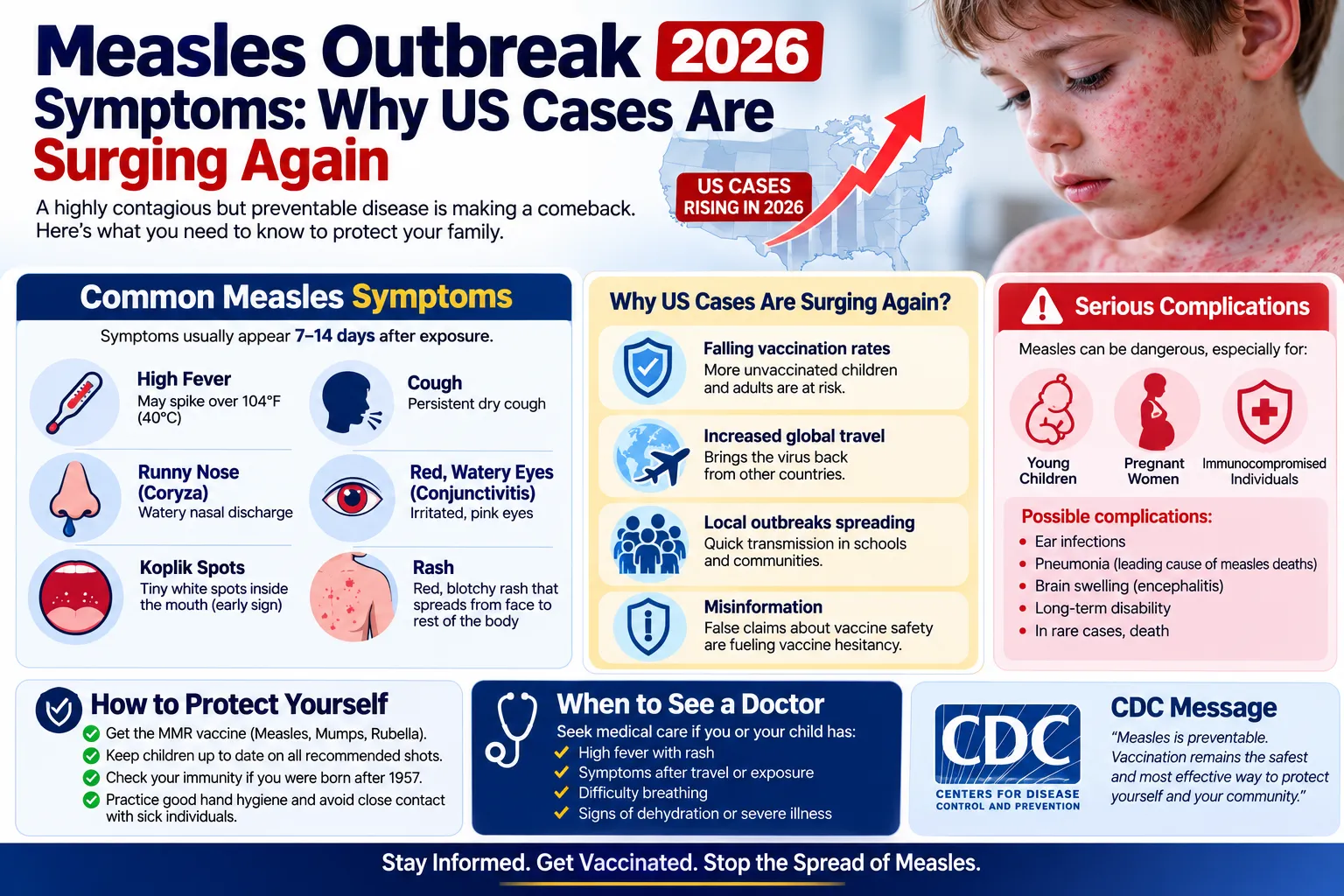
Symptoms usually appear 7 to 14 days after exposure. This first stage is often referred to as the “Three Cs”:
- Cough: A persistent, hacking cough.
- Coryza: A severely runny nose.
- Conjunctivitis: Red, watery, and inflamed eyes (pink eye).
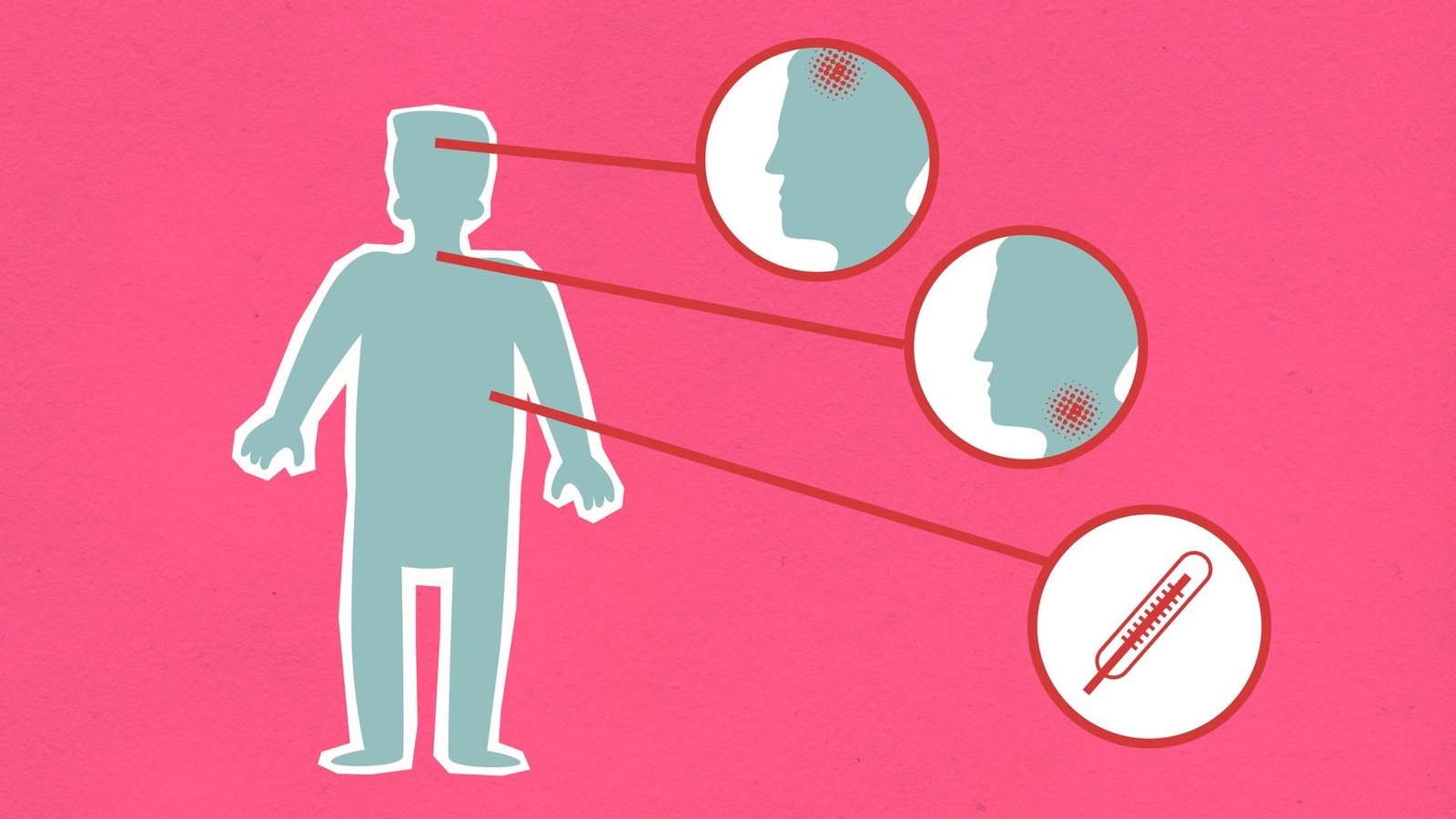
- High Fever: Temperatures often spike above 104°F (40°C).
- Koplik Spots: Small white spots that may appear inside the mouth (on the inner lining of the cheek) two to three days after symptoms begin.
The Rash Stage (Days 3–5)
Three to five days after the initial symptoms begin, the signature measles rash breaks out. It typically starts as flat red spots at the hairline and spreads downward to the neck, trunk, arms, legs, and feet. Over time, these spots may become joined together as the rash covers the entire body. During this phase, the patient’s fever may peak even higher.
Comparing Measles to Other Common Illnesses
Because many viral outbreaks share similar initial symptoms, it can be difficult for parents to distinguish between a harmless cold and a serious measles infection. The following table highlights the key differences between Measles, the Flu, and a common cold.
| Symptom/Feature | Measles | Influenza (Flu) | Common Cold |
|---|---|---|---|
| Fever | Very High (104°F+) | High (100°F–102°F) | Rare or Mild |
| Rash | Distinct red, blotchy rash | None | None |
| Eye Symptoms | Red, light-sensitive eyes | Rare | Mild watering |
| Cough | Severe, hacking | Dry/Productive | Hacking/Wet |
| Recovery Time | 10–14 days | 3–7 days | 5–7 days |
The Hidden Danger: Measles and “Immune Amnesia”
One of the most terrifying aspects of measles that medical researchers have clarified recently is a phenomenon known as “immune amnesia.” When a person contracts measles, the virus attacks the memory cells of the immune system. These are the cells that “remember” how to fight off other diseases you have already had or been vaccinated against.
As a result, a child who survives measles may find their immune system “reset” to a naive state, making them vulnerable to secondary infections like pneumonia, skin infections, and even other viruses they were previously immune to. This heightened vulnerability can last for two to three years after the initial measles infection, significantly increasing the long-term mortality risk associated with the outbreak.
Why the Outbreak is Growing: Travel and Immunity Gaps
The Measles outbreak USA 2026 is not occurring in a vacuum. The World Health Organization (WHO) has reported a global 20% increase in measles cases due to disruptions in health services over the last several years. In the U.S., many states have seen their kindergarten vaccination rates fall below the 95% threshold required for “herd immunity.”
When the vaccination rate in a community drops, the virus can jump from person to person without hitting the “dead end” of an immune individual. This is why we are seeing explosive growth in specific clusters. High-traffic areas like airports, theme parks, and schools are primary locations for transmission. If you are traveling this year, maintaining general health and situational awareness is as important as extreme heat safety or other lifestyle precautions.
High-Risk Groups and Potential Complications
While often dismissed as a routine childhood illness in the mid-20th century, measles is a serious disease with a high rate of complications. Roughly 1 out of every 5 unvaccinated people in the U.S. who get measles will be hospitalized. Some of the most common and severe complications include:
- Pneumonia: The most common cause of death from measles in young children.
- Encephalitis: Swelling of the brain that can lead to permanent brain damage or deafness (occurs in about 1 in 1,000 cases).
- SSPE: Subacute sclerosing panencephalitis is a very rare but fatal disease of the central nervous system that can develop 7 to 10 years after a person has recovered from measles.
- Pregnancy Risks: Measles during pregnancy can lead to premature birth or low-birth-weight babies.
Prevention Checklist: Protecting Your Household
To navigate the 2026 surge safely, experts recommend a proactive approach to immunity and hygiene. Use this checklist to ensure your family is prepared:
- Verify Vaccination Status: Check your records for the MMR (Measles, Mumps, Rubella) vaccine. Two doses are 97% effective at preventing the disease.
- Travel Awareness: Check the CDC’s Travel Health Notices before visiting high-risk states or international destinations.
- Hand Hygiene: While measles is airborne, maintaining strong hygiene helps prevent secondary bacterial infections that often follow viral illness.
- Monitor Symptoms: If you or your child develop a high fever and a cough, call your doctor *before* arriving at the clinic to prevent exposing other patients in the waiting room.
- Vitamin A: Doctors often prescribe high-dose Vitamin A to children with measles, as it has been shown to reduce the severity of the illness and the risk of complications.
What to Do if You are Exposed
If you discover you have been in close contact with someone who has a confirmed case of measles, time is of the essence. If you are unvaccinated, receiving the MMR vaccine within 72 hours of exposure may provide protection or significantly lessen the severity of the illness. Alternatively, a treatment called immune globulin (IG) can be given within six days of exposure to help prevent the disease or reduce symptoms, especially in high-risk individuals like infants or pregnant women.
The 2026 outbreak serves as a stark reminder that public health is a collective effort. By staying informed on the latest Measles outbreak USA 2026 developments and ensuring your family’s immunizations are up to date, you can help turn the tide against this resurgent virus and protect those who are most vulnerable in our communities.
Watch: A Helpful Video Guide
https://www.youtube.com/watch?v=y0S8V_R6540
Frequently Asked Questions
How long is a person with measles contagious?
A person with measles can spread the virus to others for about eight days: four days before the rash appears and four days after it shows up.
Can you get measles if you have been vaccinated?
It is rare. Two doses of the MMR vaccine are 97% effective. However, about 3 out of 100 people who get both doses may still get measles if exposed, though they usually have much milder symptoms.
What is the incubation period for measles?
The incubation period typically lasts 7 to 14 days from exposure to the first symptoms, though it can be as long as 21 days.